BY YAYIO WINFREY for WEEKLY VOLCANO 1/2/2026 |
As Tacoma’s only nonprofit movie theater, The Grand Cinema is a vivacious hub of community activities.
First established in 1995, the theater was relaunched in 1997 as a nonprofit by local activists. Since then, it has been best known for screening arthouse, niche, independent, international and local films that otherwise would not likely be seen in Pierce County. Committed to cultural integrity, The Grand Cinema has a reputation for showing high-quality, unconventional movies that educate as well as entertain.

Located in the heart of downtown Tacoma’s historic St. Helens District, the theater is housed inside a cozy four-plex sporting a retro look. According to Anna Somerville, director of development and communications, the building it has occupied for years was purchased this past summer. Access to a free parking lot next door is an additional perk.
One component that makes The Grand Cinema so unique is its member-supported structure. A tier of memberships is available for purchase and includes special benefits and discounts. Premium members even get free popcorn.
Although there is a paid staff, volunteers help keep the theater running. In fact, all concession workers and ushers are volunteers.
In addition to screening films, The Grand Cinema also hosts a myriad of public events. Among them is the annual Tacoma Film Festival. Held each fall, the festival works with local filmmakers, including youth film camps.
Additionally, the theater participates in a pilot program funded by Tacoma Creates, a division of the City of Tacoma overseeing arts projects.
There is also the 253 Short Film Competition, which gives both experienced and novice filmmakers of all ages the chance to make a movie in 72 hours. Named for area code 253, the contest is intense. Judges select 31 teams from all submissions and provide the four required elements needed to qualify their film. Within 72 hours, teams write, shoot and edit a short film that includes the four criteria. All films are 253 seconds long, a little more than four minutes, and winners receive cash prizes as well as recognition at a public viewing during the 253 Short Film Party. The next competition opens in February 2026.
Beyond working with filmmakers, The Grand Cinema also offers a diverse number of activities for film-viewing patrons.
Craft Night at the theater leaves the lights on and encourages attendees to work on a project while watching a movie alongside a group of creatives.
Another favorite feature is the post-film discussions, where audiences are invited to talk about a movie following its screening. The free discussions are usually scheduled on weekends and focus on newly released films. Led by a volunteer facilitator, the conversations allow filmgoers to freely express their opinions while inviting feedback from other audience members. Anyone is welcome to join, even if they have seen the film before.
Free Family Flick occurs on the third Saturday morning of each month. The public is invited to watch family-friendly movies with no admission cost.
Another popular attraction is free movie nights. Held under the stars during the warm summer months, the events feature a 30-foot screen erected at various outdoor locations. Viewers can bring chairs and blankets for comfort and enjoy free popcorn while it lasts. Movies begin as soon as it gets dark.
Weird Elephant, presumably named for the theater’s elephant logo, is a screening of an unusual cult classic film. These events are held every other week and are accompanied by light alcoholic beverages, costume contests and prizes, and other festive games.
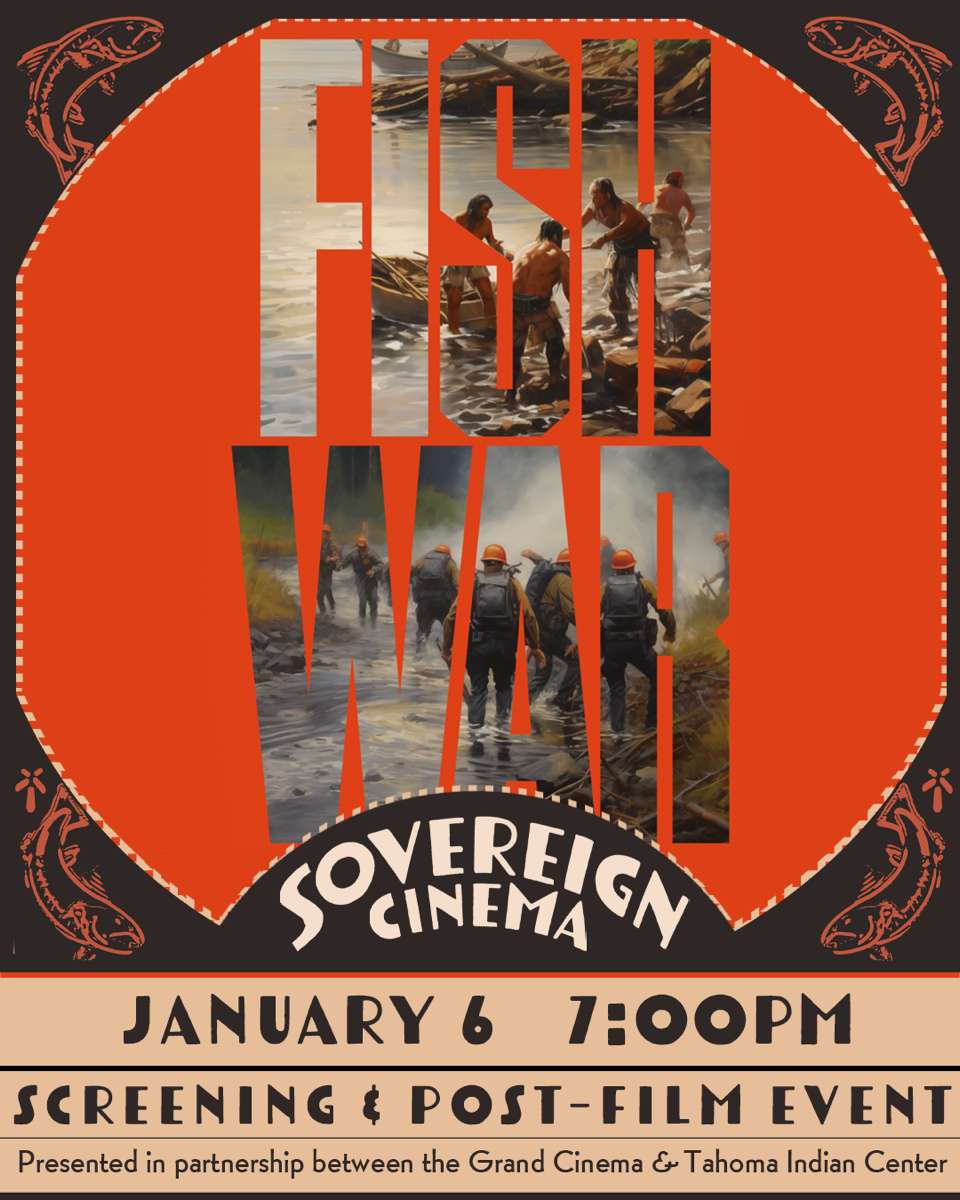
On January 6, The Grand Cinema, in partnership with the Tahoma Indian Center, will screen the controversial documentary Fish War. Produced by Northwest Treaty Tribes Media and North Forty Productions, the harrowing account of Washington state breaking its fishing treaty with local Native Americans is heartbreaking.
Utilizing rare archival footage, the film follows the battle as lines are drawn between non-Indigenous fishermen, government forces and Native Americans fishing their ancestral waters.
Spanning from the 1960s to the present, the story reveals how Indigenous people saw an opportunity to air their grievances as part of the civil rights movement. When Hollywood celebrities such as Marlon Brando and Jane Fonda joined the protests, the world took notice.
In 1974, a landmark court case created an even wider schism among the parties battling for fishing rights. Even today, many questions linger.
Following the film screening, former Tribal Council Chairwoman Ramona Bennett will discuss her published memoir, Fighting for the Puyallup Tribe.
Instrumental in combating federal agents, state patrol and local police during the fish wars, Bennett was a frequent figure in local nightly news reports covering the conflict at the time.
She was also heavily involved in the Indian Child Welfare Act, which focuses on keeping tribal families together.
For more information, visit grandcinema.com.