BY SUZY STUMP for WEEKLY VOLCANO 3/27/26 |
Despite what a certain young A-list actor may believe, opera is very much alive and drawing audiences, even here in Tacoma.
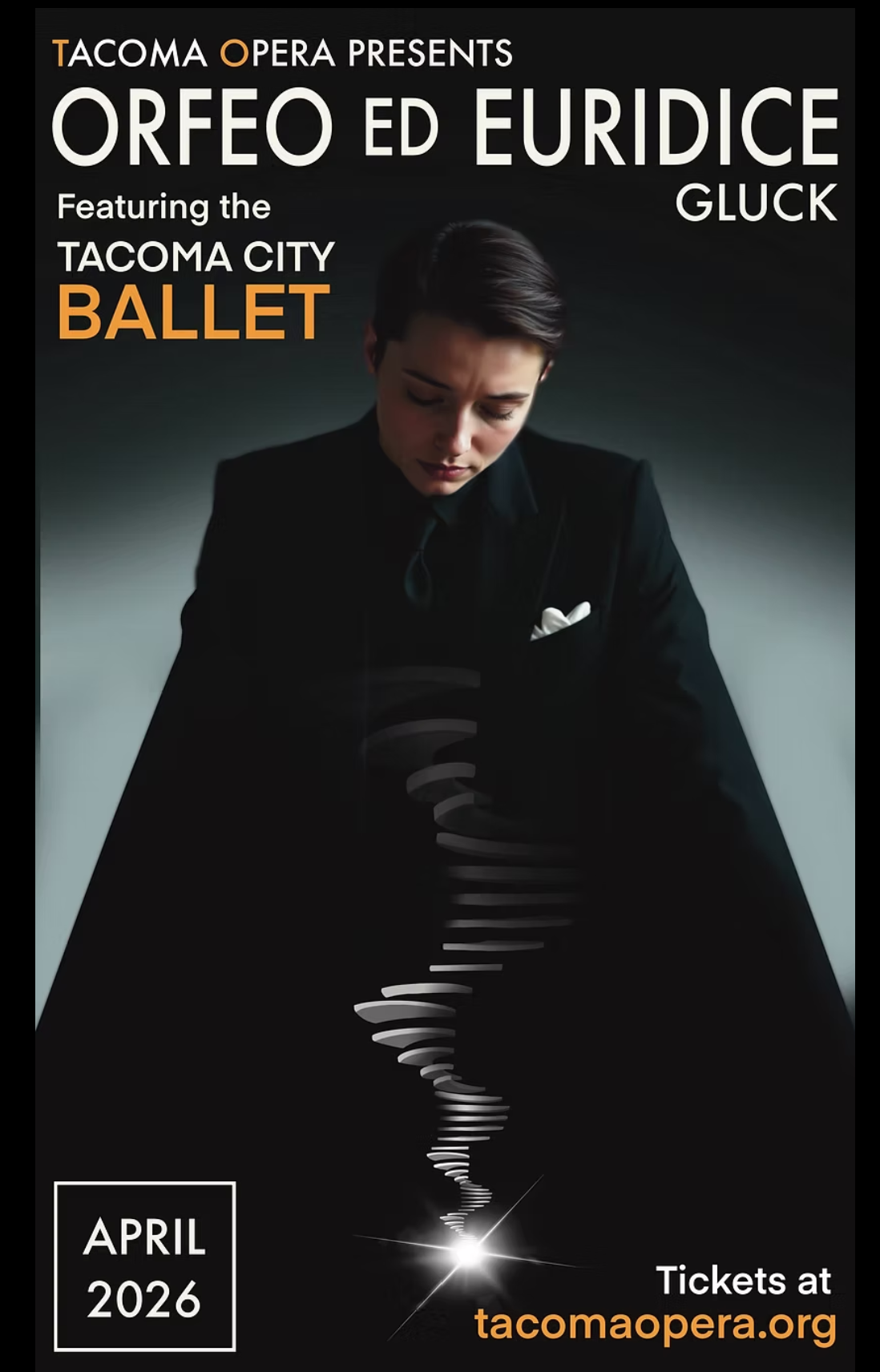
Tacoma Opera will return to the stage April 17 at 7 p.m. and April 18 at 2 p.m. at the Pantages Theater with a production of Orfeo ed Euridice, continuing a performance tradition that has been part of the city for more than five decades.
Founded in 1968, Tacoma Opera has maintained a steady presence in the South Sound, producing staged operas in downtown venues such as the Pantages and Rialto theaters. The company is a member of OPERA America and typically presents two to three productions each season, working with a mix of regional performers and singers active on national and international stages.
That scale is intentional. Regional opera companies like Tacoma Opera are designed to operate within the size of their communities, presenting a limited number of fully staged works each year.
Opera itself remains one of the most complex forms of live performance, combining music, theater, design, and movement into a single production. Unlike concerts or plays, opera requires coordination between singers, orchestra, staging, costumes, and technical crews, all working in sync for a limited run of performances. That level of collaboration is part of what has allowed the form to endure for centuries, even as entertainment options have expanded.
The upcoming production, Orfeo ed Euridice, was composed by Christoph Willibald Gluck in the 18th century and is based on the Greek myth of Orpheus, who descends into the underworld in an attempt to bring his wife Eurydice back to life. The story has been retold across literature, music, and film, but Gluck’s version is often cited as a turning point in opera history.
At the time, opera was known for elaborate vocal displays and complex plots. Gluck’s approach simplified the structure, focusing more directly on emotion and narrative clarity. That shift helped shape the development of opera into a form that prioritized storytelling alongside musical technique.
In Tacoma, the production will include collaboration with Tacoma City Ballet, reflecting the way the city’s arts organizations often intersect. Shared performers, venues, and audiences are common in the Theater District, where multiple resident companies operate within a few blocks of one another.
Tacoma Opera’s continued presence is tied in part to its relationship with Pacific Lutheran University. The company’s revival in the early 1980s was supported by PLU faculty, and the university remains a training ground for emerging vocalists. PLU’s Summer Opera Workshop, scheduled for July 5 through July 19, offers instruction and performance opportunities, with applications open through April 24 and both live and video audition options available.
For singers seeking professional roles, Tacoma Opera uses a competitive audition process that begins with recorded submissions followed by live callbacks.
Smaller companies provide performance opportunities and professional experience, while also introducing audiences to the art form in more accessible settings.
Accessibility has become an increasing focus in recent years. Tacoma Opera presents its productions with English supertitles, allowing audiences to follow the story regardless of the language being sung. Performances are held in familiar downtown venues right here in Tacoma lowering barriers for first-time attendees.
Like many nonprofit arts organizations, Tacoma Opera operates through a combination of ticket sales, donations, and sponsorship support. Its ability to continue producing work over more than five decades reflects a model that balances artistic ambition with the realities of operating in a regional market.
Within Tacoma’s Theater District, opera remains one part of a broader performing arts ecosystem that includes ballet, touring productions, and local theater companies. For audiences, that concentration of venues creates a consistent opportunity to experience live performance across disciplines without leaving the city.
The April performances of Orfeo ed Euridice continue that cycle. While the work itself dates back more than 250 years, its themes of loss, devotion, and the desire to change fate remain familiar, and its presentation on a Tacoma stage reflects the ongoing presence of opera as a living art form. Opera is timeless and remains a cultural draw decade after decade with no signs of that changing any time soon.
Tacoma Opera presents Orfeo ed Euridice at the Pantages Theater (901 Broadway, Tacoma, WA 98402) on April 17, 2026, at 7 p.m. and April 18, 2026, at 2 p.m., with tickets ranging from $25 to $145 available at tacomaopera.org.