BY SUZY STUMP for WEEKLY VOLCANO 1/9/26 |
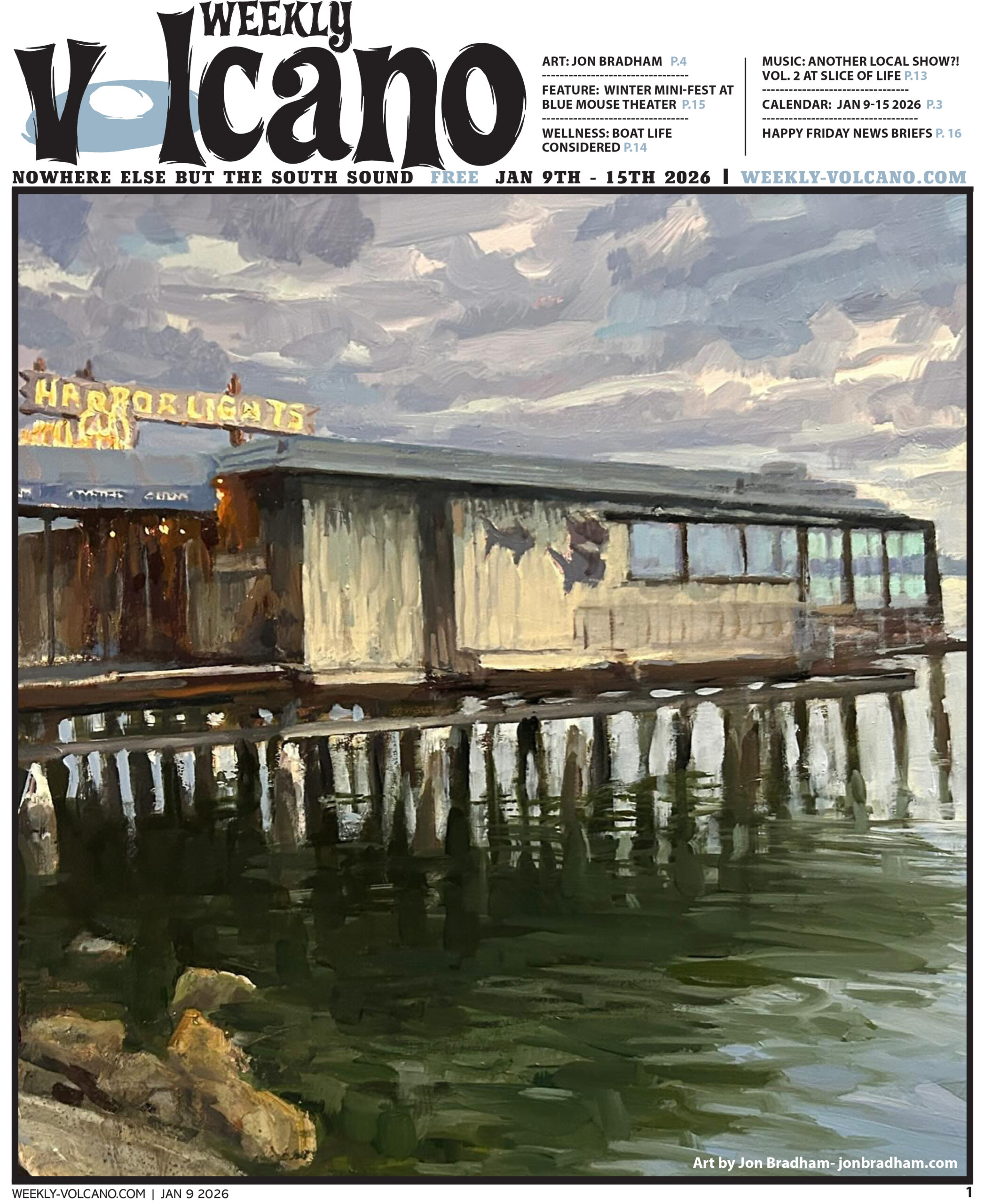
On a midwinter hike, with a light dusting of snow on the trail and forest floor, Jon Bradham was struck by nature in all its splendor. “The light was shining down through the trees, and it hit a pine tree, lighting it up,” he says. The effect reminded him of “being in a European cathedral with light shining through a stained glass window.” For Bradham, the experience captured something essential. “That is all the church that I need.”

Bradham grew up on an apple orchard in Central Washington, where days were shaped by open space and time outdoors. “I loved the freedom and outdoors of farm life,” he says. “I fell in love with nature.” That connection deepened in high school, when he painted a hawk in oil. The result surprised him. “It really felt natural and expressive,” Bradham recalls. “I couldn’t believe something like that could be produced with oil paint.” This was the moment that the artist within him was born.
Today, Bradham draws much of his inspiration from the Pacific Northwest, a region that never fails to inspire. “I love the variety of subject matter here,” he says. “You can drive from high desert to lush rainforest to the ocean all in one day.” In some cases, the contrasts are even closer together. “You can start out skiing and end up walking on the beach in the same day.” For Bradham, that diversity keeps the work fresh. “It’s really inspiring as an artist because there is always some new subject to explore.”
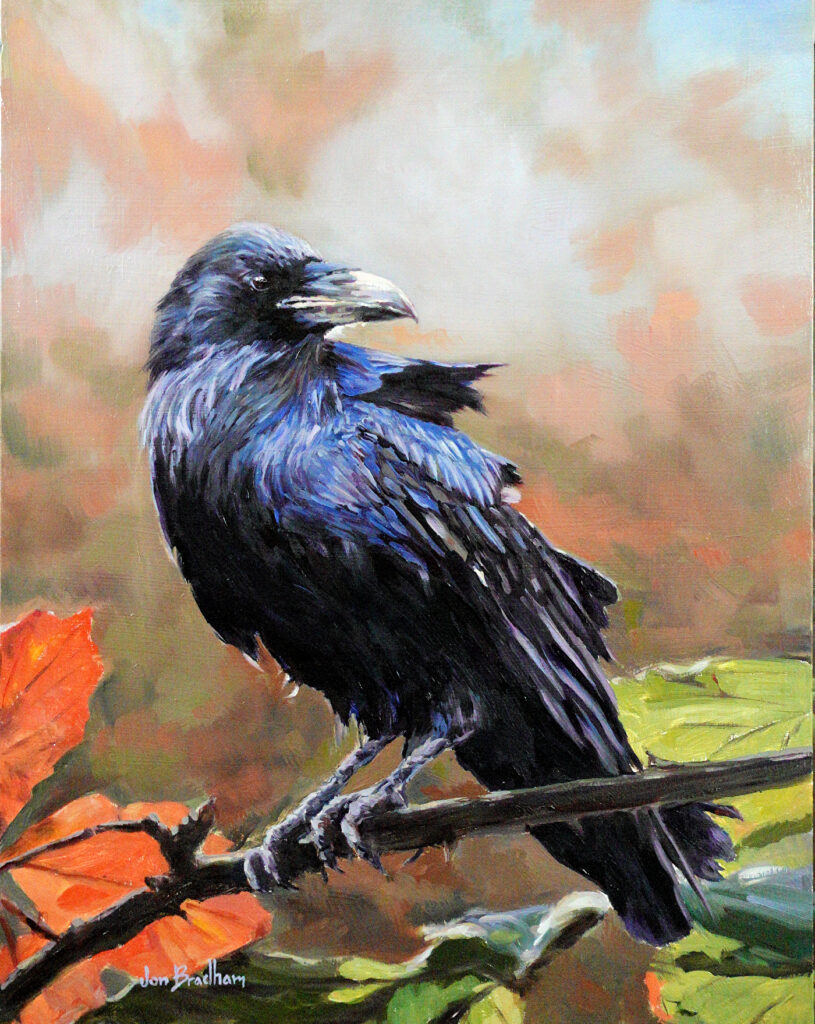
Bradham’s creative process begins outdoors. “I love being outside,” he says. “I walk and hike and ski and bike. I am always looking for the subject of a painting,” he says. “Something will jump out at me. The silhouette of a tree, a light effect.” He works primarily in plein air, a French term that refers to painting outdoors, directly from life rather than from photographs or studio references. “There is something to paint everywhere you look,” Bradham says, though the approach requires working quickly and responding to changing light and weather conditions as they happen.
That direct engagement with place is central to what Bradham hopes to communicate. “Love of nature and the power and energy you find in non-human souls, and in trees, in rivers, and in the ocean,” he says, are recurring themes in his work. “If you go out and open yourself up to nature, it fills you with this vibrant energy.” In his paintings, Bradham aims to capture a portion of that experience. “I want to try to capture just a little of that and communicate the experience to the viewer.”
Some of Bradham’s paintings include subtle elements that may not be immediately noticeable. “I often hide subtle shapes in my paintings, hoping that someone will find them,” he says. In one piece, a young woman dressed in clothing from the 1940s gazes toward distant mountains. “In the clouds, there were the shapes and faces of dragons,” Bradham says, loosely inspired by his longtime love of Ursula K. Le Guin’s novels. The details are meant as quiet discoveries rather than focal points.
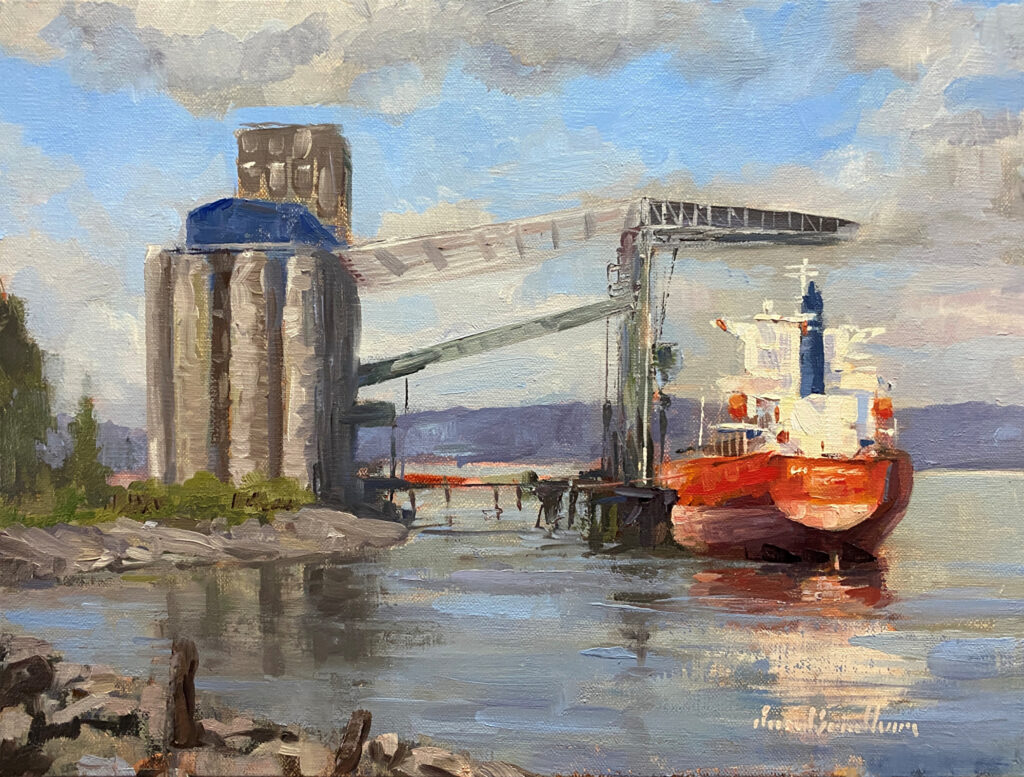
Bradham’s artistic influences span genres and eras. “In my early years, I loved manga artists, and anime artists like Katsuhiro Otomo, Hayao Miyazaki, and Shirow Masamune,” he says. As his focus shifted toward painting, he gravitated to the impressionists, particularly Monet. “I think painting reached perfection with John Singer Sargent and Nicolai Fechin,” Bradham says. “I don’t want to improve on them; rather, I just want to create something along those lines based on my travels and experiences.”
The most meaningful reactions to Bradham’s work often come from personal recognition. He recalls one older man who became emotional after seeing his painting of a bend in a river along a trail. “It was just a plein air painting,” Bradham says, “but he knew exactly where that place was.” The scene transported the man back to childhood memories of fishing there.
Bradham regularly shows his work in regional galleries, including Proctor Art Gallery in Tacoma. “Sometimes I get accepted in national shows,” he adds, including exhibitions with the Oil Painters of America.
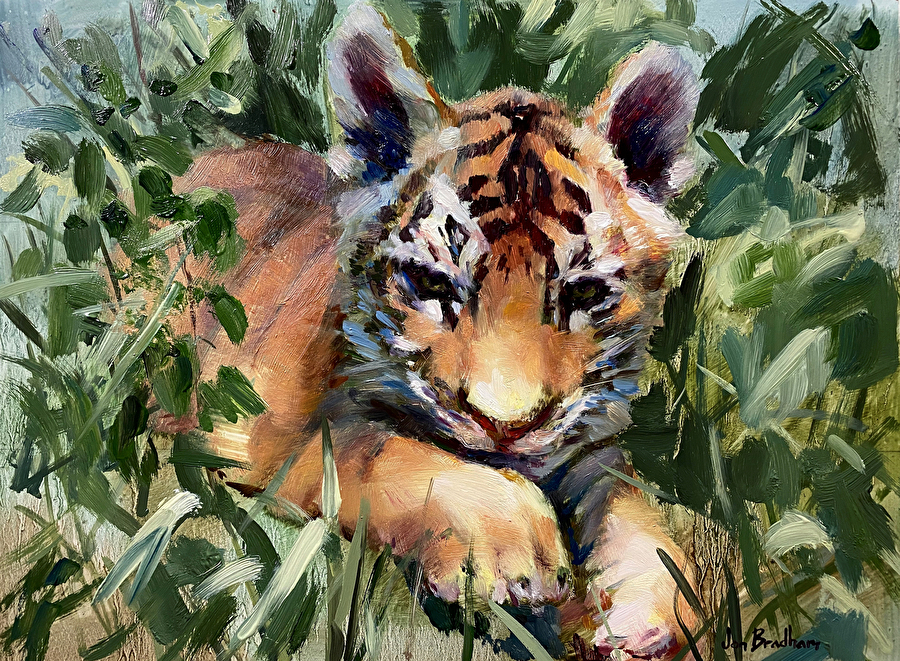
He has been attending life drawing sessions with the Tacoma life drawing group and hopes to incorporate more figurative work into his landscapes. “I currently have some paintings with figures at Proctor Art Gallery in Tacoma,” he says.