BY AARDE WRITES for WEEKLY VOLCANO 12/19/25 |
Hey Aarde,
I have been following someone online who has been open about using a supplement called kratom. He takes it daily and says it has made a significant difference in how he manages his PTSD. When I mentioned it to a group I am part of, several people immediately reacted, saying it was extremely dangerous. I am willing to hear their concerns, but I am also at a point where I need real relief, not fear-based reactions.
I am a veteran living with PTSD, and I have been carrying this weight for a long time. I am trying to do my due diligence and gather information so I can make a clear, informed decision. I am not looking to be reckless; I am looking for something that helps. If there are natural options worth understanding, I need the information to evaluate them honestly.
Signed
Holding Fast
Hey Holding Fast,
Thank you for your service and for advocating for yourself. One to three out of ten veterans have PTSD, and one in six people suffer from chronic pain. Among other tools, some are desperate for relief, and unfortunately, these individuals can quickly become dependent on prescribed pharmaceuticals. Those looking to avoid synthetic drugs, narcotics, and opioids often find themselves turning to therapeutic resources and botanical products for safer alternatives with strong results.
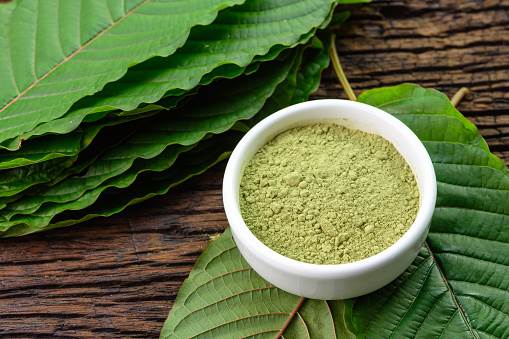
For readers who may need quick enlightenment, kratom (Mitragyna speciosa) is a tropical evergreen tree native to Southeast Asia and is biologically related to the coffee family (Rubiaceae). Much like the coffee bean, the younger and lower it grows on the tree, the more stimulant-like its effects; the older and higher it grows, the more sedative-like its effects, displaying a paradoxical existence. Yet instead of beans, the large, dark, glossy leaves are the focus and are collected by hand from trees several years old, dried, and ground into a powder. Traditionally, kratom has been used to manage pain and endure long physical work, not to escape reality or incapacitate oneself, either by chewing the leaves directly or brewing them into a tea.
A national survey by the Substance Abuse and Mental Health Services Administration reports an estimated 1.7 million Americans used kratom in 2021, while more current reports estimate up to 3 million users per day. Self-reported studies show that people with PTSD report relief from chronic pain, improved emotional regulation, reduced hypervigilance and anxiety, and an increased ability to function without being sedated or numb. Those taking kratom have reported feeling grounded rather than dissociative, stimulating or stabilizing at lower amounts, and more sedated at higher amounts. Individuals who battle drug addiction and are coming off heroin, fentanyl, or other opioids report finding significant relief from addiction through the use of kratom. A survey found that 84 percent reported it eased withdrawal symptoms, indicating potential support for opioid recovery (Hassan et al., 2022).
The basic difference between pharmaceuticals and kratom is that pharmaceuticals have single-molecule, single-dose, predictable effects. Kratom, however, is a complex plant matrix with dozens of alkaloids working together, resulting in varying effects. When compared to opioids, kratom is considered a partial agonist and has a ceiling effect to its use, and few published clinical cases report kratom-related morbidity or mortality. Kratom’s main compounds interact with opioid receptors in a mechanically different way than conventional opioids, favoring therapeutic pathways while less strongly triggering those linked to respiratory suppression and sedation. This may explain symptom relief with a distinct side-effect profile, though risks remain.
Legitimate concerns include potential dependence and minor withdrawal after regular use, liver injury, seizure risk, QT prolongation, and adverse drug interactions with SSRIs, benzodiazepines, and alcohol. Still, the most significant issue is the unregulated production and sale of kratom products. They are often sold alongside energy drinks at gas stations or through stylish online boutiques, making them widely accessible. Many kratom extracts or processed products have been chemically altered or tested with harmful additives, which is where much of the danger originates, rather than from the traditional leaf itself. When purchased through informal or unregulated channels, these products can be unpredictable and potentially dangerous.
The FDA has repeatedly issued warnings about kratom’s potential risks, citing contamination, mislabeling, and inconsistent potency, yet has stopped short of an outright ban. Meanwhile, kratom is not a classified drug, though the DEA lists it as a “drug and chemical of concern.” While that designation sounds alarming, kratom remains legal in most states.
It is crucial to educate yourself not only on the plant and its effects, but also on the scientific and anecdotal evidence supporting the use of certified kratom.
Here are additional resources for further research:
American Kratom Association, which works to protect kratom access, educate the public, advocate for federal and state legislation such as the Kratom Consumer Protection Act, and promote safe use through its Voluntary Consumer Protection Program, which enforces testing, accurate labeling, transparent sourcing, and vendor certification.
A Congressional Briefing on Kratom Science, held on September 20, 2024, in the Cannon House Office Building, where scientists, researchers, and members of Congress discussed the latest research and policy context surrounding kratom.
https://www.youtube.com/watch?v=uc_UqjQfmzI
A 2020 Johns Hopkins University study titled Natural Herb Kratom May Have Therapeutic Effects and Relatively Low Potential for Abuse or Harm, According to a User Survey.
Kratom Consumer Protection Act.
https://www.congress.gov/bill/118th-congress/house-bill/5905
Global Kratom Coalition, which advocates for access while promoting consumer safety, works to influence FDA and DEA policy, establish Good Manufacturing Practices, promote third-party testing for purity and alkaloid content, and publish guidelines for safe dosing and product labeling.
Holistic Alternative Recovery Group, which focuses on harm reduction, alternative therapies, and support for people using kratom for mental health, pain, or addiction recovery. The group provides expert testimony and education to lawmakers, emphasizes patient experiences and the difference between traditional kratom leaf and adulterated extracts, offers voluntary vendor certification programs, educates suppliers on avoiding adulterants and contamination, and publishes resources for responsible consumer use.
Andrew Huberman’s interview with Dr. Chris McCurdy, a medicinal chemist, behavioral pharmacologist, and pharmacist who serves as the Frank A. Duckworth Eminent Scholar Chair in Drug Research and Development and a professor of medicinal chemistry at the University of Florida.
https://www.youtube.com/watch?v=gyE6Z4GLEeM
These efforts aim to create a self-regulated, science-informed standard that protects consumers from contaminated products while demonstrating to regulators that kratom can be managed safely. After researching, move forward cautiously, use in moderation, determine the minimal effective dose, and rely on certified, properly sourced products.
Disclaimer: This information is educational only and does not constitute medical advice or replace consultation with a licensed health care professional.
Caveat: This article is advocacy forward, and the current understanding of kratom is informed primarily by self-reported data and early research. Its potential benefits must be considered alongside documented risks and existing scientific gaps.
Do you have a question for Ask Aarde? Email Jdaarde@gmail.com