BY MATT KITE for WEEKLY VOLCANO 4/10/26 |
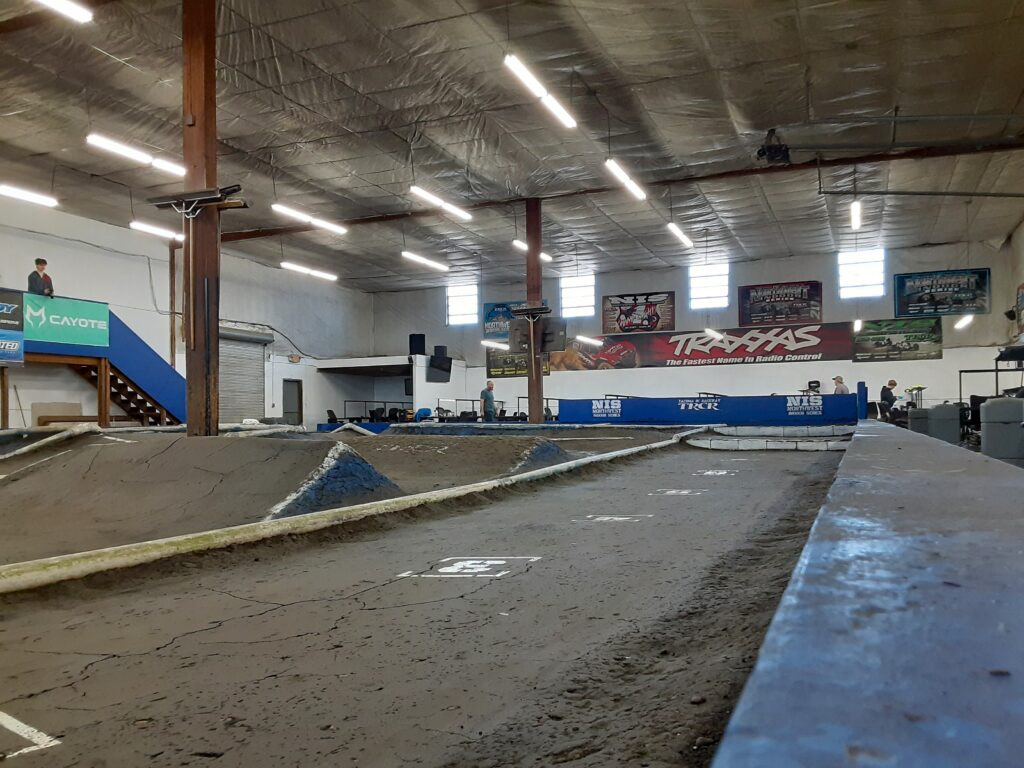
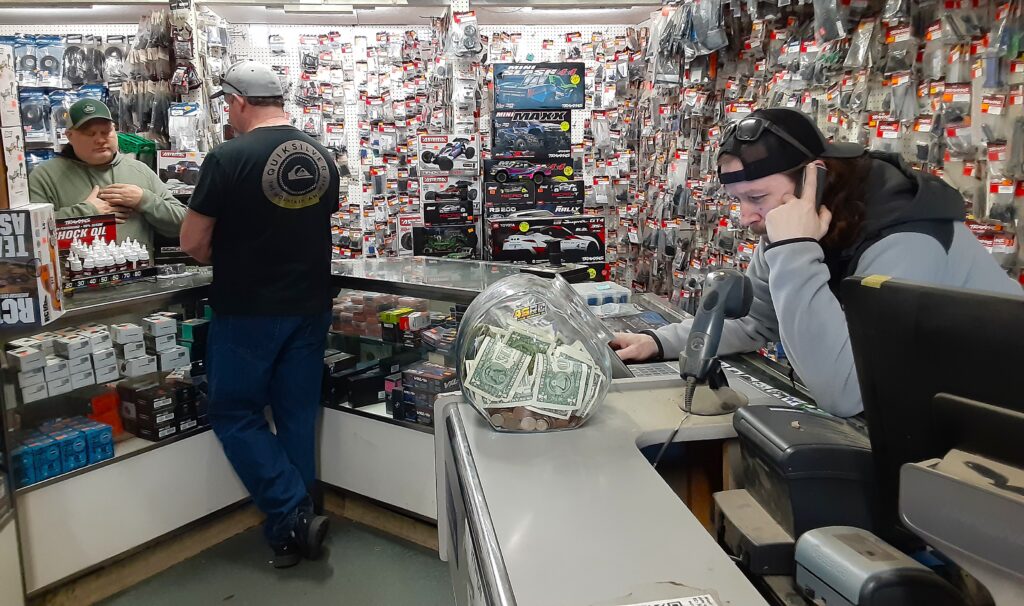
Hidden inside a tidy warehouse just a couple of blocks west of South Tacoma Way is Tacoma R/C Raceway, the city’s only hobby shop dedicated to RC (radio-controlled) cars and trucks. From the outside, it might not look like much, but inside, the floor-to-ceiling inventory and the enormous race track leave a lasting impression on visitors, especially those entering for the first time.
“People deliver food here a lot of times,” says Todd Bennett, a clerk at the store since 2018. “And they come in, and their eyes get all wide. They’re like, ‘I didn’t know this was a thing.’”
It is indeed a thing, especially for hobbyists whose idea of a good time involves toy vehicles moving at lightning-fast speeds. The shop, open seven days a week, has everything you might need to get started: cars, trucks, rows and rows of spare parts, and a 5,400-square-foot indoor clay race track that will put your skills and reflexes to the test.
Bennett, who grew up in Minnesota, finished his military career at Fort Lewis and decided to stay in the area. At the time, he was a frequent visitor to the store and race track, and when he retired from the Army, owner Scott Brown offered him a job. He’s been like a kid in a candy store ever since.
“When I was a little kid playing with remote-control cars, it was always fun for me,” Bennett recalls. “A neighbor kid had a nice one, and I got to drive it, and I started cutting grass and shoveling driveways and saving my money from that to buy my first hobby-grade RC car.”
From there, Bennett’s interest in the hobby was like a runaway freight train or, more precisely, an IndyCar shifting into high gear. Like a lot of his customers, Bennett finds himself buying better and ever more impressive cars and equipment to fuel his passion, but he insists that a beginner and even an experienced RC driver does not need to break the bank to get the most from the hobby.
A small entry-level car that is best suited for indoors might cost $100 or so, while an outdoor-worthy one might start at $150. From there, the sky is the limit. You might pay $250 or so for an off-road truck or $1,200 or more for a race car that can compete in tournaments. It all depends on where you will be taking your fun. A homemade race track on the kitchen floor with a few chairs for obstacles requires a less sturdy vehicle than an open meadow outside, where your car or truck will encounter dirt, rocks, and all kinds of debris.
Just like the price tags of RC cars and trucks, the machinery inside them varies. Some are strictly battery operated. Others actually burn gas. All of them can go fast. Really fast. It is not unusual for a basic unit to hit sixty miles per hour, but the ones that go by in a blur can easily top one hundred.
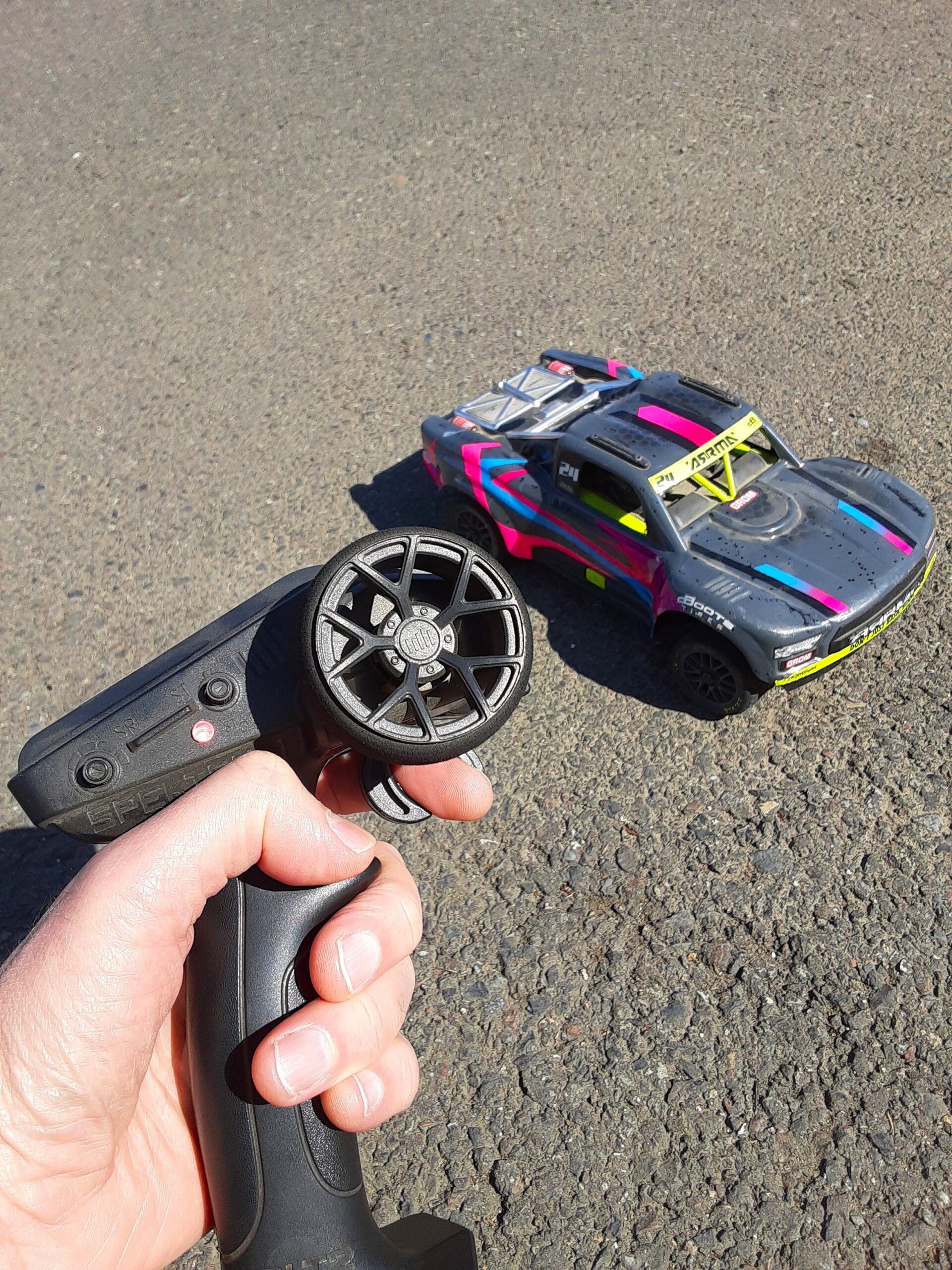
Most vehicles come assembled, although you might have to install the wheels, and every vehicle comes with its own transmitter that you will use to guide it through its paces. Be sure to charge the batteries before your first test drive.
According to Bennett, there is no typical customer at Tacoma R/C. Yes, most of the customers and racers are male, but not all. Hobbyists run the gamut from young girls and their moms to middle-aged men and their dads reliving childhood. The excitement spans generations, and more often than not, drivers and racers help each other out with things like technique and repairs.
Every year the shop hosts the Northwest Indoor Series, a regional tournament that features five races and then a championship race that matches the best against each other. There is also the ROAR Region II Championship, slated for June 5–7.
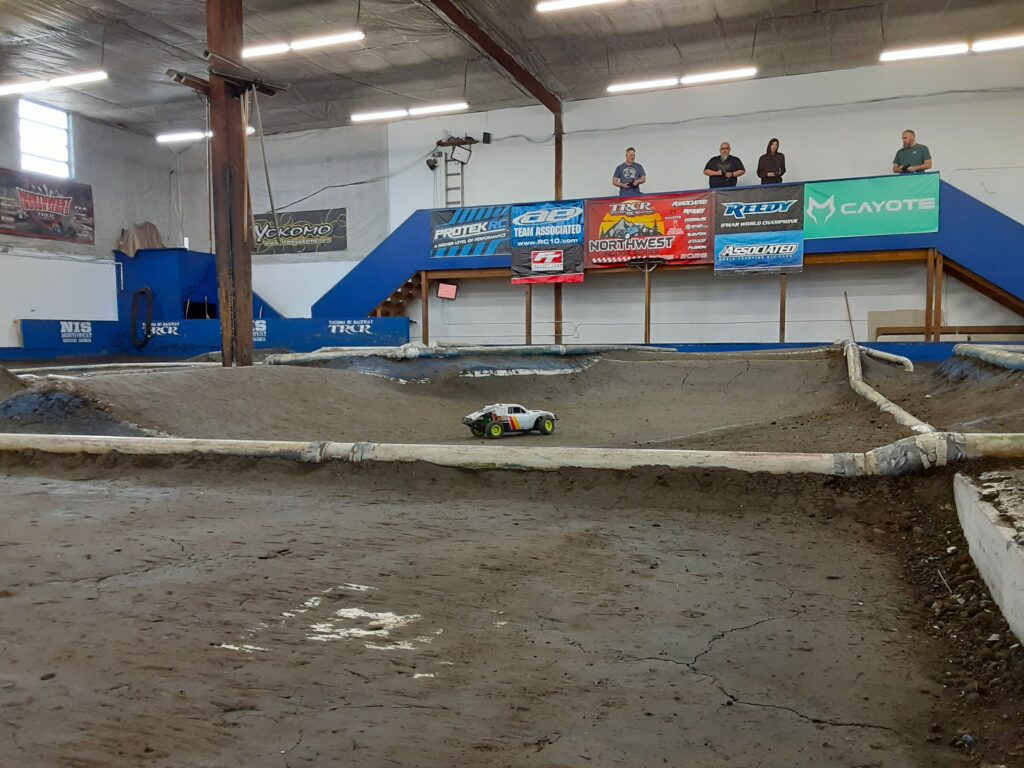
The huge race track features hairpin turns, gravity-defying jumps, and a circuit that is regularly tweaked to keep the racing fresh. Several workbenches on two sides of the track serve as pit tables of sorts, where drivers can stock parts and equipment needed to keep their vehicles moving. The drivers stand atop a balcony on the far wall and enjoy a commanding view of the race course. Each driver holds a hand transmitter that sends a signal to their car or truck.
If you watch racers practice long enough, you will witness some serious hang time as the cars and trucks launch from a series of jumps. You might also see the occasional wipeout or rollover, at which point someone has to jog out onto the track to right their vehicle. The hazards are not much different from what someone might encounter while zipping their RC car or truck through a parking lot or over a bumpy backyard.
“Let me tell you,” Bennett says, “cement is undefeated. It always wins.”
In the event of a serious mishap, Tacoma R/C probably carries the part or parts you will need to get your vehicle up and running again. Ultimately, it is all about the community of people who have turned high-speed maneuvering into wholesome recreation.
“It’s always nice to do well on the track,” Bennett says. “It’s even better when you see you helped someone else do well, and you can see them with their friends and family and stuff, and they’re all happy and excited. When you see somebody else grow through their racing journey or whatever it is, when they do well, to me anyway, that’s worth more than whatever I’m doing for myself.”
Bennett encourages everyone in the hobby to learn how to fix their own vehicles, and he has a friendly reminder for the spouses and significant others of RC hobbyists who are hopelessly hooked.
“We never outgrow our hobbies,” he says with a laugh.
To learn more, visit Tacoma R/C Raceway online at Tacomarc.com.
Photos by Matt Kite.