
BY NATHAN SPIECKER for WEEKLY VOLCANO | 7/3/2026
Where you keep your money determines what entity, if any, insures its safety.
Your money may look safe in an account, but what if the company holding it suddenly went out of business?
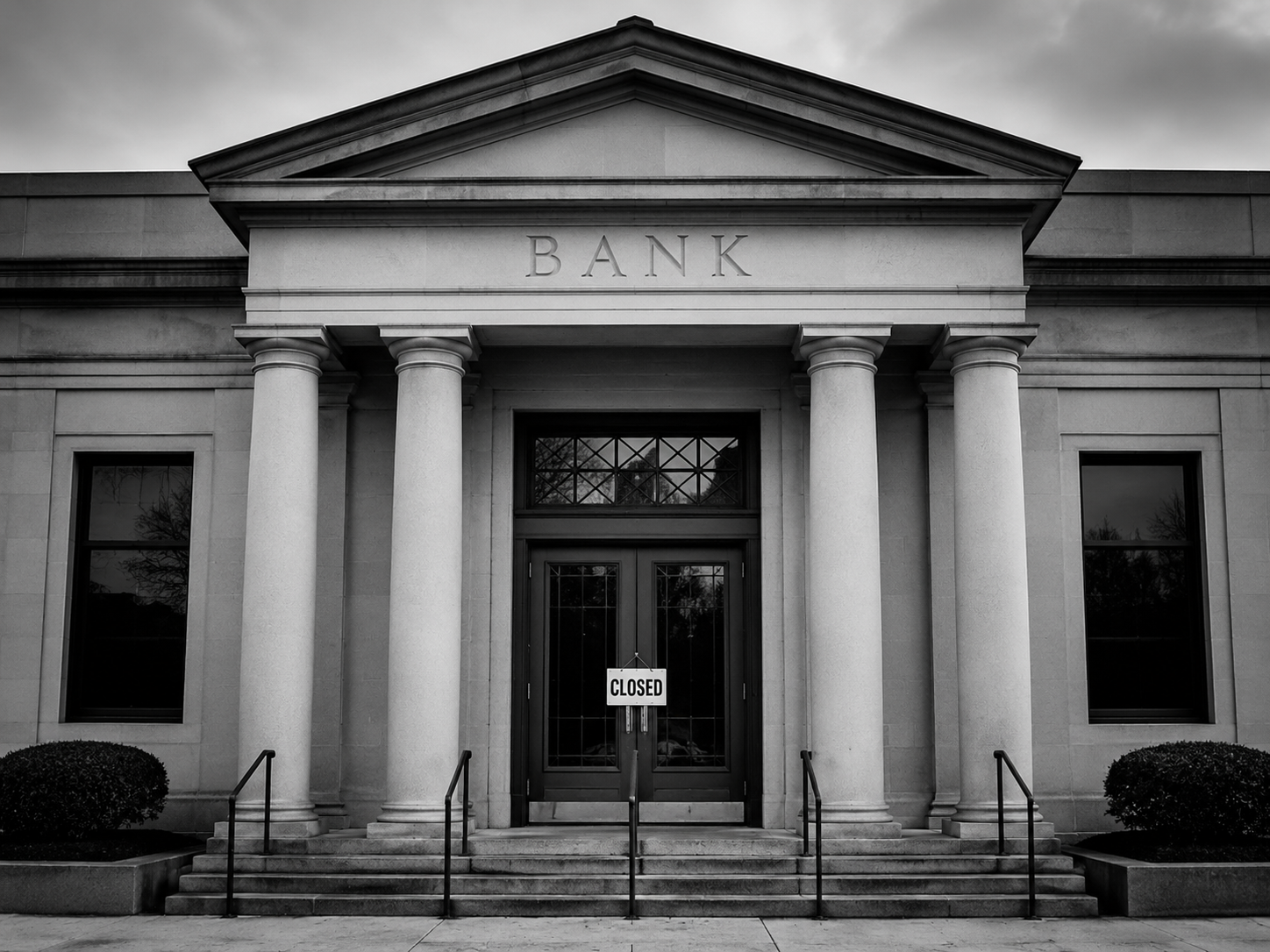
A few years ago, Anna had about $800 in her bank account. She didn’t think much about where the money was held. It was just where her paycheck went and where her bills came from. Then one morning, she heard that her bank had failed. For a moment, it felt like the floor dropped out. Rent was due the next week, and she wasn’t sure whether she would be able to make the payment on time. But within days, she was able to access her balance, which was still intact and accessible through another institution. She hadn’t signed up for anything special. She hadn’t paid extra. The protection was already in place.
That protection is called deposit insurance. And it’s one of the clearest examples of how financial regulation shows up in everyday life. In last week’s column, we talked about regulation and why it matters. This is where that idea becomes tangible. Deposit insurance is not abstract. It answers a very practical question: if a bank or credit union goes out of business, what happens to our money?
In the United States, the Federal Deposit Insurance Corporation, or FDIC, insures most banks, and the National Credit Union Administration, or NCUA, insures most credit unions. If our institution is covered, our deposits are insured up to $250,000. That limit applies per depositor, per institution, and per ownership category. That last part matters more than it sounds. A single person with one checking account is insured up to $250,000. But if that same person also has a joint account or a separate savings account under a different ownership category, the coverage can extend further. The structure of our accounts affects how much of our money is protected, and the FDIC’s Electronic Deposit Insurance Estimator, or EDIE, can help us calculate how much of our funds are covered by deposit insurance.
It is important to understand that this is not something we opt into. We don’t have to fill out a form or pay a fee. It’s the institution’s responsibility to be insured. Our job is simply to make sure the place holding our money is covered, and most of the time, we’ll see this clearly. Banks and credit unions typically display FDIC or NCUA signage in branches and on their websites. But it’s still worth checking. A quick search of your institution’s name with the FDIC’s BankFind tool or the NCUA’s Credit Union Locator tool can confirm whether it’s insured.
If it is, the system is designed to work quickly. When a big-name bank failed a few years ago, federal regulators stepped in almost immediately. Depositors were able to access their insured funds within days and, in some cases, as soon as the next business day. For most people, there was little interruption to their ability to pay bills or use their money. That outcome isn’t an accident. It reflects a system built around the idea that individual consumers should not bear the full risk of an institution failing.
At the same time, it’s important to be clear about what deposit insurance does not cover. It does not protect against losses from scams. If someone tricks us into sending money, insurance generally won’t replace it. It does not cover investments, even if they’re offered through a bank or credit union. And it does not apply to every financial product that looks like an account.
This is where confusion tends to come in. Some payment apps, prepaid cards, and financial technology companies allow you to store money, receive direct deposits, and pay bills. On the surface, they can feel similar to a bank account. But in many cases, they are not banks or credit unions, and our money may not be directly insured in the same way. In some situations, these companies partner with insured institutions, and our funds may be “pass-through” insured. In others, the protections are more limited or depend on how the account is set up behind the scenes. And in some cases, there may be no deposit insurance at all.
That distinction becomes critical if something goes wrong. When an insured bank or credit union fails, there is a clear, established process to ensure your money is safe. When a nonbank, non-credit-union financial company fails, the outcome can be slower, more complicated, or uncertain. Consumers may find themselves waiting in line with other creditors, rather than being protected as depositors. This doesn’t mean that all nonbank services are unsafe. Many of us use them every day. But it does mean the protections are different, and therefore, the risk is different. Understanding that difference is part of making an informed choice and keeping our funds safe when the unexpected happens.
Here in Washington, the Washington State Department of Financial Institutions plays a role in overseeing many financial service providers, especially those operating at the state level. That oversight adds another layer of accountability. But even with state and federal regulation, deposit insurance remains one of the most direct protections tied to your day-to-day financial life.
So, what should we actually do with this information? Well, we can start by checking where our money is held. Is it a bank or a credit union? Is it insured by the FDIC or the NCUA? Next, look at how our accounts are set up. Are they individual accounts, joint accounts, or something else? If we have higher balances, it may be worth understanding how the $250,000 deposit insurance limit applies to our situation. Finally, it is worth being cautious with services that don’t clearly state how our funds are protected. If it’s not obvious whether our money is insured, that’s a signal to pause and ask questions.
Deposit insurance doesn’t prevent institutions from failing. That risk never fully goes away. What it does is change what that failure means for us. For Anna, it meant that a stressful situation didn’t turn into a financial crisis. Her money was still there when she needed it, thanks to FDIC deposit insurance. That’s the role deposit insurance is designed to play: not to eliminate risk entirely, but to make sure that when something does go wrong, we’re not left starting from zero.
This week’s action is simple: Confirm whether your money is in an insured account, and if you’re not sure, take the time to find out.
This column is produced by the Washington State Department of Financial Institutions, Washington’s financial services regulator, to provide consumer education and protection. Learn more or file a complaint at www.dfi.wa.gov.