BY AVERY GOODSTINE for WEEKLY VOLCANO | 7/10/2026
The Point Defiance Aquarium will host the We Are Puget Sound traveling photo exhibit for the next two years.
Partnering with Washington Conservation Action and Braided River, the Pacific Seas Aquarium officially opened the exhibit on June 5, just in time for World Oceans Day on June 8.
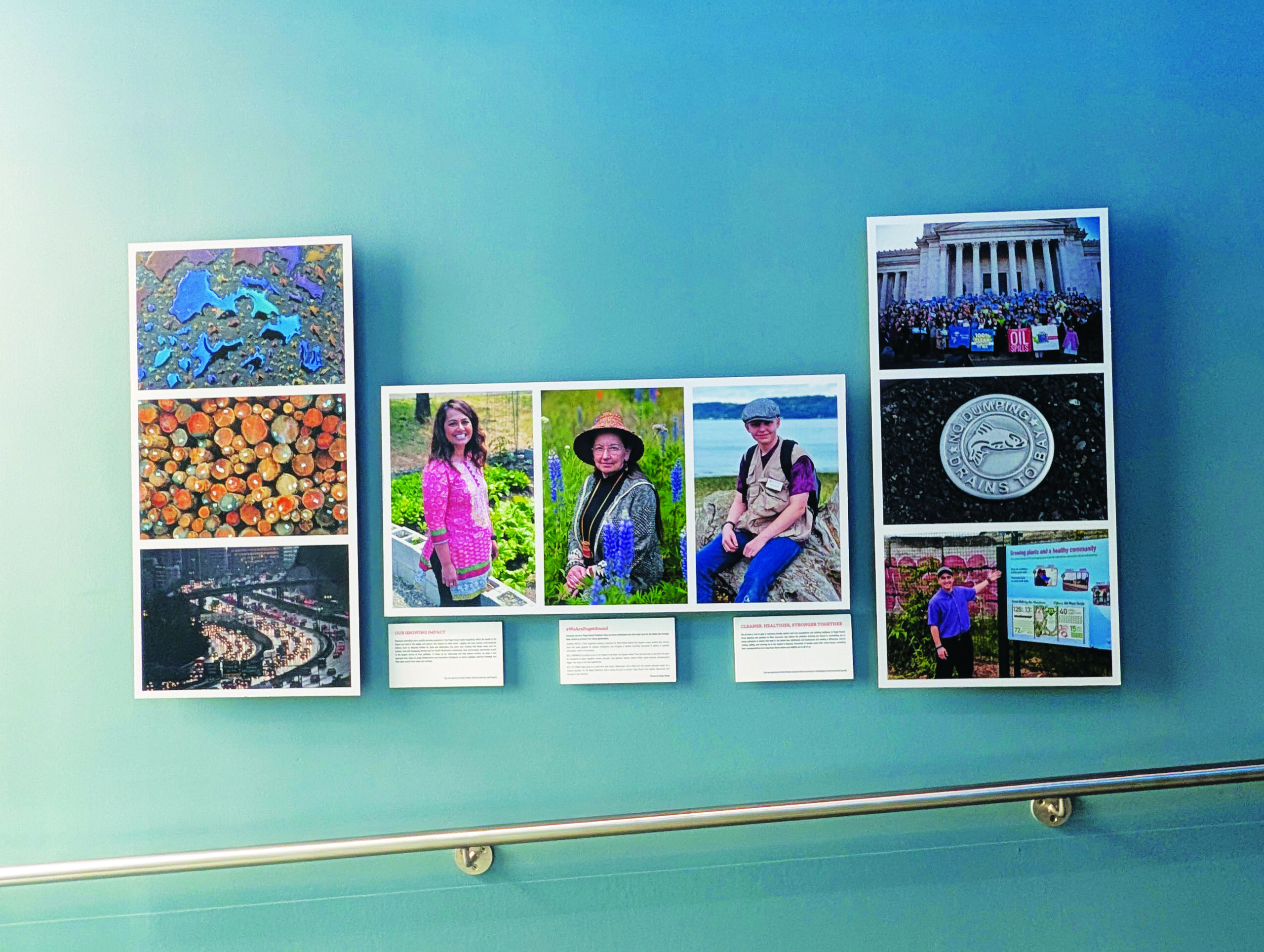
The exhibit displays photography from the book and regional campaign We Are Puget Sound: Discovering & Recovering the Salish Sea, which highlights the places, people, and ideas that are driving efforts to protect and restore Puget Sound.
The book, published in 2019, features regional photographers and those working toward protection and rehabilitation.
“[The book] is a compilation of authors that came together to really showcase and wanted to bring awareness of what’s happening in the Sound: the species, the beauty, just an overall appreciation of the Sound, but also a call to action in terms of protecting and caring for the Sound,” said Jasmine Williams, the zoo and aquarium community collaboration manager.
The call to action, she added, is to encourage community members to simply do something. Whether it’s an individual act or broader advocacy, it’s important that people are educated about the Sound and take action to preserve it.
According to the We Are Puget Sound website, the exhibit is “designed to inspire urgent action to restore the Puget Sound’s health” with an interactive “Act Now” station that invites people to take a pledge to support the Sound.
The traveling exhibit has been displayed in many areas around the state, but it fits in perfectly with the Pacific Seas Aquarium because many of the animals captured in the photos can also be seen throughout the aquarium and are native to local beaches.
“This is a great partnership, and a great way to showcase the Sound, great way to talk about the things that we do to conserve and care for the Sound with our research and species recovery, the different efforts that we have,” Williams said.
In the exhibit, there are photos of orcas, sea lions, a giant Pacific octopus, salmon, jellyfish, and many other creatures that call Puget Sound home.
While the quirky and fun critter photos are a wonderful part of the exhibit, some of the photos capture the human and natural sides of the Sound as well.
There is an aerial photo of the “veins and arteries” of the Sound, Skagit Valley farmers, the Elwha River, logging history, and even some winter recreation activities.
Some of the photos also highlight Indigenous culture and traditions. One photo, titled “Connection to Ancestral Waterways,” depicts three Samish tribal canoes on the beach of Fidalgo Bay in Anacortes. The photo caption states that the Canoe Journey is an annual event where Pacific Northwest tribes and First Nations travel along ancestral water highways along the Salish Sea. The tradition honors their connections with the land, water, and each other.
Williams said it’s important for people to know how they can also support tribal rights and treaties, and how those rights and treaties are not only embedded into the history of the Sound, but continue to support the Sound today.
The exhibit is installed in a hallway that otherwise usually remains fairly empty, Williams said, and is just one of the different ways aquarium officials hope to fill that space in the future.
Aquarium visitors can see the exhibit at no extra cost, and so far, Williams said there has been nothing but positive feedback.
“I think people feel like it’s a great addition, particularly in that space, because there wasn’t really anything there before,” she said. “I think it just fits as a really nice addition, and it connects with everything that guests are seeing.”
Williams added that it’s an “interesting” time to host this exhibit because the aquarium recently solidified its four signature conservation initiatives: Healthy Puget Sound for All, Coexisting with Carnivores, Wildlife Neighbors, and Return of the Red Wolf.
The Healthy Puget Sound for All initiative focuses on supporting efforts that protect and restore the Sound’s marine ecosystem and reduce human impact. Specifically, the Point Defiance Zoo and Aquarium played a role in getting bull kelp officially named as the State Marine Forest of Washington earlier this year.
Williams said hosting the photo exhibit “felt really right,” considering this recent effort.
“I think there’s a twofold takeaway that I would love visitors to walk away with. One is recognizing that we, as an institution, and other conservation organizations are working to care for and protect Puget Sound and its marine ecosystem. But I also would love folks to walk away feeling connected and resonating with their own experiences with Puget Sound, and thinking about how they can care for and protect Puget Sound in their own way,” she said.
The Sound is part of a larger marine ecosystem called the Salish Sea, and its health and productivity are interwoven with the region’s quality of life.
According to the Environmental Protection Agency, the Sound is home to more than 200 species of fish, more than 100 species of birds, 20 species of marine animals, and more than 3,000 species of invertebrates, many of which have seen serious declines and are at risk of extinction.
We Are Puget Sound identifies 10 simple ways people can get involved and help protect and restore the Sound:
- Vote for local, state, and federal candidates who are proud advocates for Puget Sound.
- Hold elected officials accountable. Ask them to create and support legislation and budgets that prioritize natural resources.
- Understand and support tribal treaty rights and understand the cultural relevance of salmon to tribes.
- Reward businesses that protect the Sound and its people.
- Eat local. Support regional farmers and fishers who grow and harvest food ethically.
- Support organizations that work for positive change.
- Include and empower communities of color. Focus efforts on the most affected populations.
- Empower young people by volunteering with youth groups.
- Reduce your own impacts. Find one way to reduce your environmental footprint every year.
Learn about the Sound by experiencing it, and share your knowledge with others.