BY KEELIN EVERLY-LANG for WEEKLY VOLCANO | 10/30/2026
On Oct.18, our Tacoma and Pierce County community was rocked by yet another incident of violence between young people that ended in the death of a 16-year-old.
Charges have been filed against an 18-year-old, a 19-year-old, and 20-year-old in the teen’s death.
Four days before this incident, Pierce County held a conference looking toward a better future, with a panel that included some ways the county is working to prevent exactly this type of tragedy. While these efforts won’t take away the pain being felt in the community, these solutions can provide a focus to move toward.
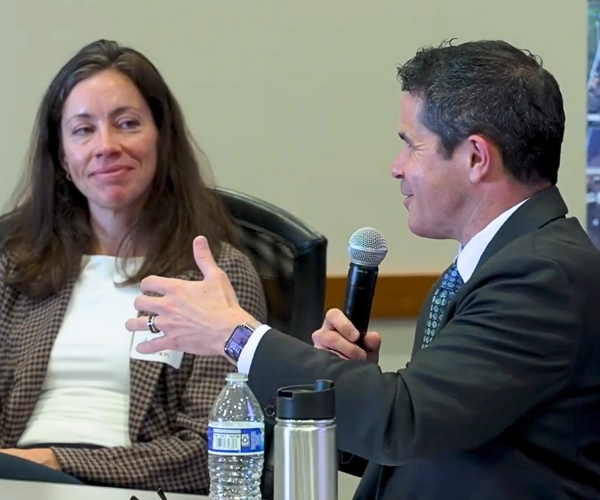
The first-ever Pierce County Forward Together Summit was held on Oct. 14 and touched on topics impacting the daily life of community members including housing, economic vitality, and the well-being of youth.
In their Supporting Youth to Thrive panel, the participants discussed the many ways the county is supporting all ages of youth in the community. That discussion also included evidence-based approaches to violence response and prevention.
Panelists shared some insights from the 2025 Pierce County Youth Violence Prevention Needs Assessment, which found a 28% increase in youth violence in 2022-2023.
The number one risk factor shared in the report was that “children who are exposed to violence are at an increased risk of engaging in violent behavior and exposure to multiple forms of family violence exponentially increases the risk.”
Other factors like substance use, poverty, mental health disorders, and poor academic performance are all risk factors as well.
Panelists shared how Pierce County has spent the past two decades working to move away from what data shows is ineffective, to what the data shows is effective — specifically moving away from youth detention and toward rehabilitation and diversion.
This is because research has found that “removing young people from their homes, schools, and communities, and placing them in institutions, is most often counterproductive” because it “increases the likelihood that youth will return to the justice system and reduces young people’s future success and well-being,” according to a report titled “Why Youth Incarceration Fails: An Updated Review of the Evidence.”
That report found that youth incarceration “also exposes many youth to abuse” and “contradicts clear lessons from adolescent development research by interfering with the natural process of maturation that helps most youth desist from delinquency, and it exacerbates trauma that many court-involved youth have suffered earlier in life.”
Detention is still an important tool when there are no safe community alternatives, but if incarceration isn’t the best and only answer, what does actually work to prevent youth violence?
The 2025 needs assessment found that “school-based programming, including during and after the school day, has the potential to reduce violence,” and that “conflict resolution skills are a key focus that may reduce violent interactions among youth.”
The report also recommended “programming focused on behavioral health needs, including substance use, depression and anxiety, trauma, and healthy relationships,” as a way to influence rates of youth violence.
For those who are already involved in violence, the report recommended “therapeutic services that address behavioral issues and include family therapeutic services to improve communication, reduce conflict, and improve parents’ guidance and supervision of their children” and specifically mentioned Multisystemic Therapy, which was designed for chronic and violent offenders.
Panelists described how Pierce County is working to implement these recommendations and shared that the effort to focus on more evidence-based responses, and move away from youth incarceration in Pierce County, actually began back in 2001, when Pierce County joined the Juvenile Detention Alternatives Initiative (JDAI), which is a model utilized by many different jurisdictions across the country.
“We were definitely a leader nationally in that … basically, you have core strategies, and the idea is that you are going to reduce youth violence by meeting them where they’re at, and reducing detention, and looking at this as really rehabilitative,” the Honorable Jennifer Andrews, Juvenile Court Presiding Judge, said at the October panel.
The Supporting Youth to Thrive panel also included Court Executive Chris Gaddis and Deputy Director of Human Services Anika Moran.
Together they shared an overview of the variety of services the county provides to the 300,000 residents of Pierce County who are under age 21.
Through various county departments including Human Services, Parks, Economic Development, and Juvenile Court, the county has more than 80 contracts to deliver youth services.
These contracts “span things like behavioral health, youth violence prevention, early intervention services, early childhood education,” Moran said.
To make sure that the right services are meeting the youth in the community that need them, coordination is key.
“One thing that we’re really looking at is how do we coordinate and connect across those programs a little bit better? I think that’s something Executive Mello’s office has been really encouraging us to do. Even just in preparing for this presentation, I think we’ve developed better connections with parks and economic development and our partners over in juvenile court,” Moran said.
Even looking at their success benchmarks and indicators, each metric is coming from different sources and time frames, but what all the data points to is the importance of “more of a coordinated rather than a siloed response,” Moran said.
This coordination is especially important because the youth accessing these resources don’t experience these services as separate systems.
“Youth are just moving about their lives, and it is our responsibility as county government to make these services accessible to them in a way that makes sense,” Moran said.
Funding for all these programs has seen a lot of ups and downs.
Funding specifically for programs for justice-involved youth has recently increased through HB 2015, and the Ballmer Group is contributing statewide funding to child care and early learning. But the county received 36% less funds from the Puget Sound Taxpayer Accountability Account than expected, “which was a pretty big decrease in funding for out-of-school programming and child care investments in the county,” Moran said.
Each funding source comes with different requirements and allowable uses, which sometimes means that existing programs have to shift focus or evolve in order to qualify.
While funding does fluctuate, “I do think that one thing that really holds steady … is the importance of our partner organizations, which do this work on the ground to support youth even as these resources shift,” Moran said.
The panel also discussed many other ways the county is working on the goal of ensuring that “Pierce County’s children and young adults are physically, mentally and socially healthy.”
To watch the full recorded panels or learn more about the summit, visit piercecountywa.gov/9159/Forward-Together-Summit