BY KORBETT MOSESLY
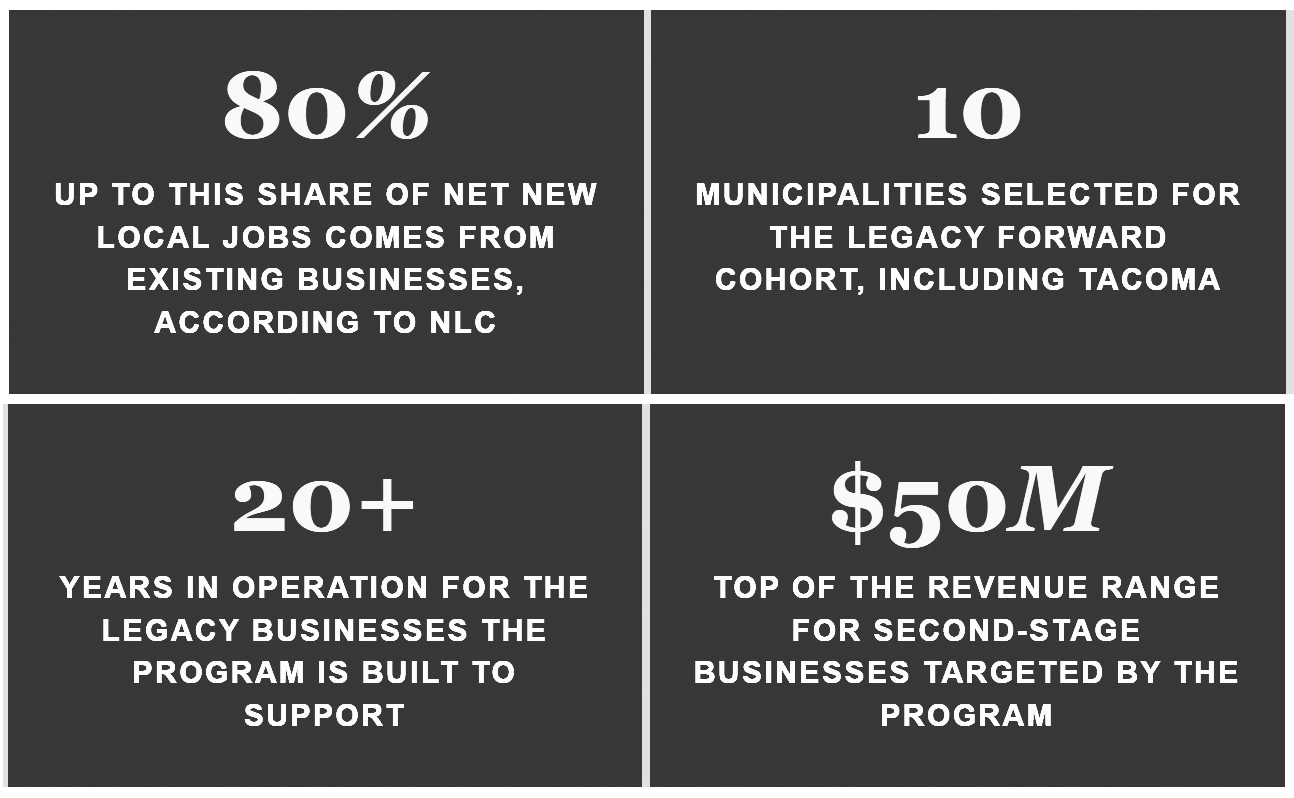
Tacoma is one of 10 U.S. cities selected for Legacy Forward, a National League of Cities program backed by the Nasdaq Foundation to help established small businesses survive ownership transitions.
The selection builds on work already underway locally: the Black Collective’s Business Navigator program has spent the past year building the one-on-one relationships that help owners plan for succession before a crisis forces the decision.
A strong local business can still disappear if there is no plan for what comes next. When an owner retires without a successor or a strategy, a neighborhood can lose jobs, tax base, family wealth, and decades of community identity along with the storefront.
Tacoma’s selection for Legacy Forward gives the city a national platform to address that risk before it becomes a closure. Led by the National League of Cities and supported by the Nasdaq Foundation, the program helps local governments sustain, grow, and transition businesses that have anchored communities for decades.
Legacy Forward targets second-stage businesses, which are companies past the startup phase but short of corporate scale, with fewer than 100 employees and between $1 million and $50 million in annual revenue. They are large enough to anchor a corridor but small enough that one owner’s transition can decide the company’s future.
When these businesses close without a plan, workers, families, corridors, and public revenue all feel it. Legacy Forward gives Tacoma a chance to treat succession planning as part of its broader economic resilience strategy.
In May 2026, the National League of Cities announced Tacoma as part of the Legacy Forward cohort. Cohort work began in June 2026, including training, peer exchange, and technical assistance. The cohort concludes in February 2027, giving Tacoma a focused window to turn national support into a durable local model.
Legacy Businesses Are Community Infrastructure
Economic development often celebrates what is new: startups, ribbon cuttings, innovation hubs. Legacy Forward starts from a different premise: the businesses already employing residents, holding storefronts, and anchoring commercial corridors are not yesterday’s economy. They are infrastructure, carrying relationships that never show up on a balance sheet: the owner who sponsors youth programs, the shop that hires across generations, the business that helps a family build wealth over time.
The Black Collective Already Built the Bridge
The national program brings tools, technical assistance, and a structured timeline. Tacoma brings local knowledge, and the Black Collective brings trusted relationships with owners that city outreach alone may not reach. Ownership transition is personal: an owner may only discuss succession with someone who understands the community and the pressure of keeping a business alive.
The Black Collective, a Tacoma-Pierce County network of business owners, residents, and community organizations, submitted a letter of support for Tacoma’s application, calling ownership transition “one of the most critical and most overlooked moments in the small business lifecycle.” That insight is already built into its Business Navigator program, launched with Sound Outreach. Through free one-on-one support, Navigator Michael Jordan helps Black-owned businesses across Pierce County assess where they stand and move toward stability or growth, sometimes on cash flow, sometimes on expansion, sometimes on an exit strategy built before an owner is forced to decide under pressure.
“Support from the Nasdaq Foundation is helping cities keep established businesses operating, ensuring entrepreneurs who’ve built them over decades have local government in their corner,” said Clarence E. Anthony, CEO and executive director of the National League of Cities.
The opportunity for Tacoma isn’t to build a new system from scratch. It’s to strengthen the connective tissue between city government, community organizations, navigators, lenders, and the owners who need support before a transition becomes urgent, combining the reach of local government with the trust of community networks.
A strong city partnership can turn business succession from a private crisis into shared economic infrastructure.
Preserving Businesses Is Also a Wealth Strategy
That combination matters most for Black, immigrant, and low- to moderate-income entrepreneurs, who often face barriers to capital and formal business networks. A succession plan touches valuation, debt, real estate, family expectations, buyer readiness, and financing. No single program solves all of it, but a coordinated partnership can make the path visible, connect technical assistance to capital, and let new owners step into existing businesses instead of starting from zero.
For communities historically locked out of ownership, lending, and commercial real estate, succession planning determines whether wealth stays local and the next generation can build on what came before. That makes Tacoma’s Legacy Forward work a jobs strategy and a corridor-stability strategy, not just business retention, and with the Black Collective already doing the on-the-ground navigation, Tacoma starts from a stronger foundation than most cities in this cohort.
Legacy Forward: Sustaining, Growing, and Transitioning Established Businesses
NLC’s Legacy Forward initiative supports cities working to preserve established businesses, strengthen local ownership transitions, and keep community-serving employers rooted where they are needed most.
Where These Numbers Come From
Legacy Forward cohort size, city selection, second-stage business definition, and job-creation framing come from National League of Cities program materials. Business Navigator program details come from the Tacoma-Pierce County Black Collective and Sound Outreach program descriptions.
How to Build on the Partnership
Business transitions work best when owners, city partners, and community navigators start the conversation before a crisis forces the decision.
If you own a long-running Tacoma or Pierce County business: Start succession planning early, even if retirement or sale still feels years away.
If you are a Black business owner navigating growth, cash flow, expansion, or exit questions: Connect with the Black Collective’s Business Navigator program for free one-on-one support.
If you work in economic development, lending, workforce, or small business support: Align your services with Tacoma’s Legacy Forward work so owners move through one connected system instead of disconnected referrals.