
BY NATHAN SPIECKER for WEEKLY VOLCANO | 7/10/2026
We might think paying $3 here or $5 there doesn’t add up, but small fees can quietly drain hundreds of dollars a year.
Luis didn’t notice it at first. He uses a prepaid card to manage his money. It feels straightforward: load cash, pay bills, withdraw when needed. But each time he adds money, it costs $1.50. Each withdrawal costs another $2. By the end of the year, those small charges add up to more than $200. That’s money he earned but never really got to use.
Luis’s situation isn’t unusual. Many of the most common financial services, whether they’re a bank account, prepaid card, or check-cashing service, come with fees attached. Some are clearly listed. Others are harder to spot. And often, it’s not one large fee that causes problems, but a steady stream of small ones.
In the last column, we talked about how protections like deposit insurance can keep our money safe if an institution fails. But safety and cost are not the same thing. An account can be protected and still be expensive to use. This is where it helps to look more closely at how fees work in everyday life.
Let’s start with something simple: monthly account fees. Some checking accounts charge $5 to $15 per month unless we meet certain conditions, like maintaining a minimum balance or setting up direct deposit. Throughout a year, that can mean $60 to $180 just to keep the account open.
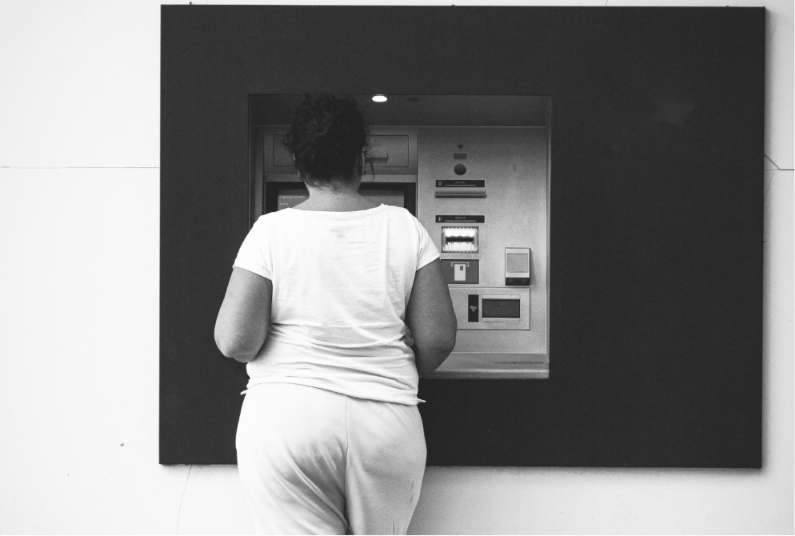
Then there are ATM fees. Using an out-of-network ATM might cost $2.50 to $3.50 from our financial institution, plus another $2 to $3 from the ATM operator. One withdrawal could cost $5. Do that once a week, and we’re looking at roughly $250 a year.
Overdraft fees tend to be even more significant. Many banks charge an estimated $30 to $35 per overdraft. If our account balance drops below zero and transactions continue to go through, those fees can stack up quickly. It may not always feel like borrowing, but in practice, overdraft functions as a form of short-term credit, and a costly one. Consider a quick example. If a $20 purchase triggers a $35 overdraft fee, that’s effectively the cost of borrowing $20 for a very short period. Framed that way, the price becomes harder to ignore.
For those of us who don’t use traditional bank accounts, the fee structure often looks different, but the pattern is similar. Take check cashing. Instead of depositing a paycheck into an account, some of us pay a fee to access our money immediately. That fee might be 1 percent to 5 percent of the check amount. Cashing a $1,000 paycheck could cost $10 to $50. Over a year, that can add up to hundreds of dollars. Or consider someone who pays bills in cash using money orders. Each money order might cost $1 to $3. If we’re paying rent, utilities, and other bills this way every month, the total cost adds up quietly in the background.
These fees don’t always feel like a problem in the moment. They’re small, predictable, and often tied to services that feel necessary. But over time, these fees reduce the amount of money available for everything else: rent, groceries, savings, or emergencies. Part of the challenge is that fee structures are not always easy to understand.
Research from the Consumer Financial Protection Bureau has shown that when pricing becomes more complex, when fees are split up, conditional, or triggered by specific behaviors, we have a harder time identifying the true cost of a product. Similarly, regulators have raised concerns that some fees are structured or disclosed in ways that make them difficult to anticipate. In other words, it’s not just that fees exist. It’s that they are often designed in ways that are hard to track in real time. This confusion can lead us to pay more than we expect.
This is where a few common assumptions start to break down. It’s easy to think that fees are just part of the system and can’t be avoided. In reality, many accounts and services offer ways to reduce or eliminate fees, depending on how they’re used. It’s also common to assume that prepaid cards are always cheaper than bank accounts. In some cases, they are. In others, the combination of loading fees, transaction fees, and withdrawal fees can make them more expensive over time. Cash can feel like the simplest option, but using cash to pay bills or access services often comes with its own costs, whether through money orders, check cashing, or travel time. And overdraft can look like a helpful safety net. But when we look at the cost per transaction, it often functions as a high-cost way to cover short-term gaps.
None of this means there is a single “right” way to manage money. People use different tools for different reasons. Access, convenience, and timing all play a role. But understanding the cost of each option makes it easier to decide what works best for our situation. There are also some protections in place. In Washington, financial institutions are expected to clearly disclose fees, and consumers have the right to question charges they don’t understand. If something doesn’t seem right, we can reach out to the Washington State Department of Financial Institutions to ask questions or file a complaint.
There are also efforts to make lower-cost options easier to find. Bank On Washington works with banks and credit unions across the state to identify accounts that meet specific standards for affordability and accessibility. These accounts are designed to have low or no monthly fees, no overdraft fees, and fewer barriers to opening an account. For someone looking to reduce costs without giving up basic financial services, they can be a useful place to start.
Still, the most effective protection is often awareness. One way to start is by looking back at our recent transactions. Not just the big expenses, but the smaller ones that are easy to overlook. How many fees did we pay last month? What were they for? Are there patterns? From there, we can decide what, if anything, we want to change. That might mean switching to an account with no monthly fee, planning withdrawals to avoid repeated ATM charges, or exploring options that reduce the need for check cashing or money orders. Even small adjustments can make a difference over time.
Luis didn’t stop using his prepaid card right away. But once he saw how much the fees were adding up, he started looking at alternatives. He found ways to reduce how often he loaded cash and withdrew money. Over time, those changes meant more of his paycheck stayed in his pocket. That’s the goal here. Not perfection, and not a complete overhaul overnight. Just a clearer understanding of where our money is going, and a few decisions that help us keep more of it.
This week’s action item is to review our last month of financial activity and identify every fee we paid. Add them up. Then see whether there are any ways we can reduce how much we pay in fees, whether by looking into other, more affordable services or by being intentional with how we manage our money to avoid unnecessary fees.
This column is produced by the Washington State Department of Financial Institutions, Washington’s financial services regulator, to provide consumer education and protection. Learn more or file a complaint at www.dfi.wa.gov. Read previous columns on our blog at https://dfi.wa.gov/financial-education/blog.