BY PETER J. CALLAGHAN
If your only memory of the area around Union Station is one formed in the last 30 years, you might think it has always looked like it does now. You might even take it for granted.
My own memory goes back much further, and I take it for granted.
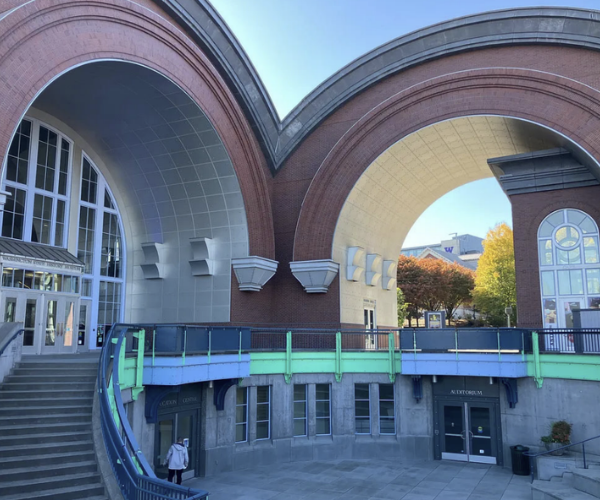
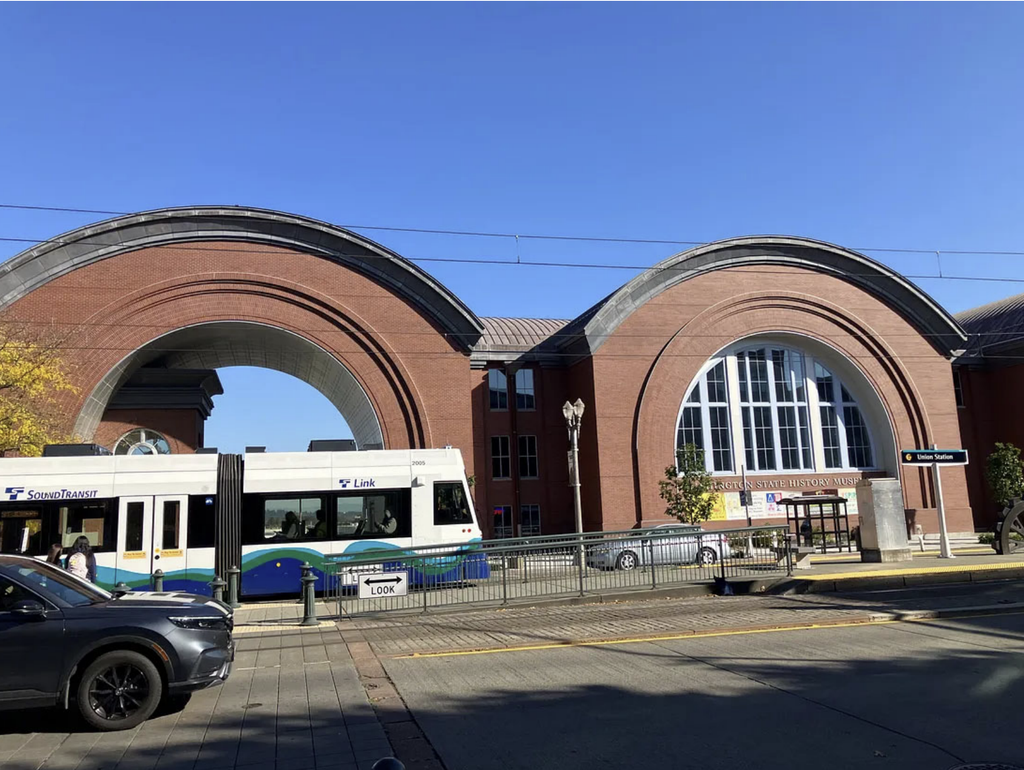
Come off on the 21st Street exit from I-705, the runt of a freeway that was once deemed vital to the survival of Tacoma, and you are presented with a fairly active Pacific Avenue. The streetcar might be passing by. The School of the Arts and then the University of Washington Tacoma campus sit on the left. To the right are the brick-covered vaults of the Washington State History Museum.
As you drive or ride the streetcar into downtown, the impressive dome of Union Station dominates, hiding the federal courthouse on its shoulder. Then comes the Tacoma Art Museum, which seems to add a wing every year or two. Finally a hotel appears on the left, built in conjunction with the convention center up the hill.
Only then do you get to the hole in downtown created by the Cornerstone Mistake — the 1980s-era demolition of two blocks of commercial buildings dating from the early 20th Century. The promise that empty lots would draw developers lasted as long as the Seattle-based developer remained in town.
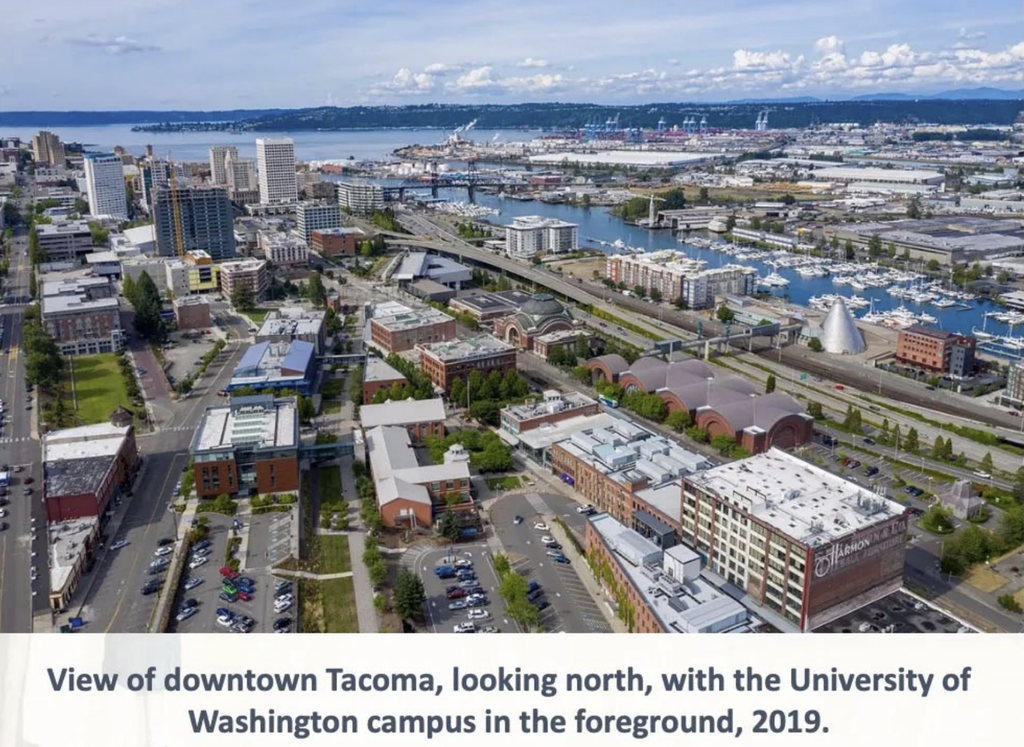
This image from a recent presentation at the history museum — a panel discussing the opening of the new museum 30 years ago — shows what we see now. It includes the work to reclaim the industrial City Waterway now named for Thea Foss and the Bridge of Glass that links the two.
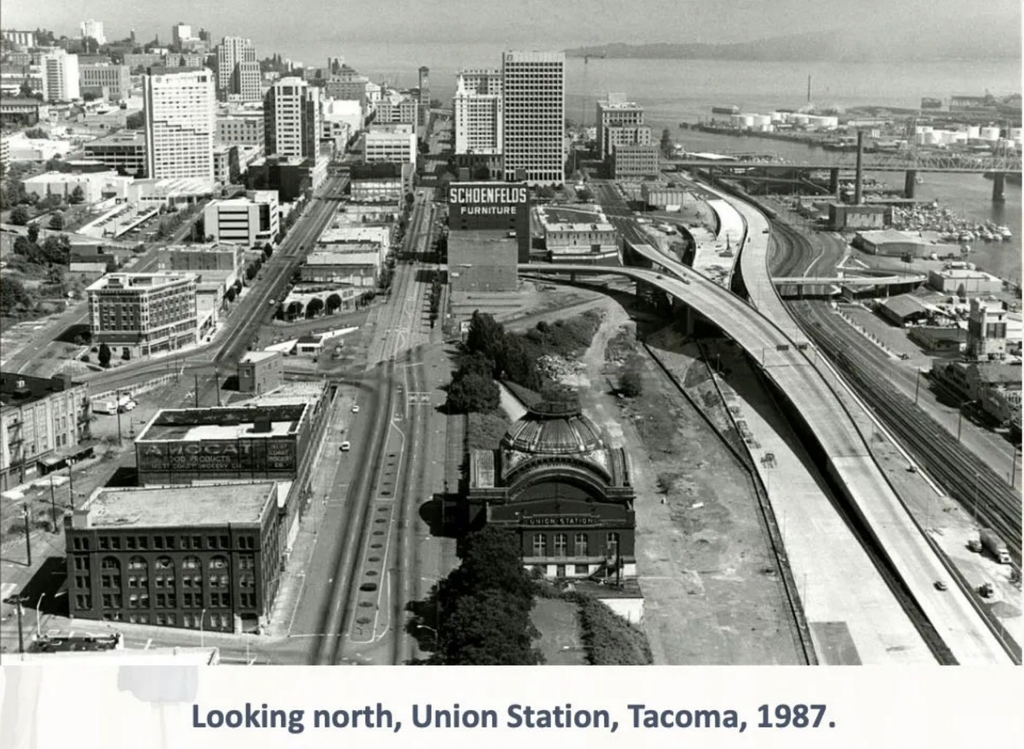
But the same presentation included a different photo that shows how different the landscape was. These two images do a better job of telling the story. I’m just adding some words to give me something to float the photos in.
While the blocks between South 13th and South 15th streets across from what was once a ‘60s-era bus depot were of equal vintage as those across from the station, at least they had tenants — a Skid Row collection of taverns, tattoo parlors, strip clubs and amusement parlors. Less so the storefronts across from Union Station.
In a 1979 report commissioned by the U.S. Department of Interior meant to promote the rehabilitation of The Union Station District, the authors noted in bureaucratic understatement that while the district “remains largely intact” (this was before the clearcut of the strip between 13th and 15th), “the bustle of the railroad era is gone; the excitement of the early automobile days has faded.
“Driving or walking north along Pacific Avenue towards downtown Tacoma, the visitor sees a deserted district,” the report continued. “Buildings vanish behind flat, monochromatic paint jobs. Gaudy advertisements obscure the elegance of old hotels.
Warehouses appear empty; their current occupants, for the most part, a collection of specialized firms with little need for strong public appearance.”
Of the final blocks, it referenced the taverns, bookstores like Elmo’s and nightclubs like Esmerelda’s.
In the 1970s, a photographer named Stephen Cysewski documented what cities including Tacoma looked like by taking photos mostly devoid of humans. His photos take us from the aerial view above to the street level and provide proof of how far the city had fallen into despair.
The visual context is vital in telling the story of the history museum, Union Station, the UWT, the art museum. They all seem logically placed in the historic part of a post-industrial Tacoma. At the time, however, it seemed ludicrous.
As the historic study suggests, some had been thinking that the district’s fate wasn’t predetermined by that depressed present. But even the city thought 1911 Union Station shouldn’t be part of it, preferring a demolition to a rehabilitation. The closest one city engineer got to a preservation ethic was to hollow out the building and open the arches to create an open-air marketplace.
Jim Merritt, the architect who led the design of the new federal courthouse and the restoration of Union Station, still tells the story that he wouldn’t meet clients in his office in what had been the Teamsters Hiring Hall at South 17th Street and Commerce.
Instead he would meet at their offices in other parts of town. Nor would he let his family meet him at the office due to the population of people with pretty severe cases of substance abuse.
David Nicandri, who led the state historical society before, during and after the creation of the museum, recalled during the discussion that he couldn’t even persuade his board that placing a new museum downtown made any sense at all.
“They saw it as nine blocks of nothing on Pacific Avenue,” Nicandri said. The board had initially just wanted money to renovate its existing museum that still stands on the rim on Stadium Bowl, opposite the high school. The agency had a tiny staff and struggled even to host a Smithsonian exhibit on the Wilkes Expedition of 1838–42 called “Magnificent Voyagers” in 1987. But they pulled it off, drawing 50,000 visitors, and raised the profile of the museum immensely.
“Most attendees not only had never been to the history museum, they didn’t know it existed,” Nicandri said.
A separate but harmonious effort was ongoing to save the abandoned Union Station from demolition. Save Our Station, led by Kathryn Van Wagenen and Linda Bowman, was getting some attention in Olympia to shore up the Reed-and-Stem-designed building as various ideas for reuse were floated. Most were bad (an ice skating rink?), but one that proved prescient was to house a new history museum. While that wasn’t deemed feasible, it did shift the gaze of museum backers to the area. It took a letter from a Tacoma resident named Seymour Johnson to foresee the station as a courthouse.
Success has many parents, but the best recollection of how the two ideas merged came from Brian Ebersole, a former Tacoma mayor who was speaker of the state house in the midst of the dreaming.
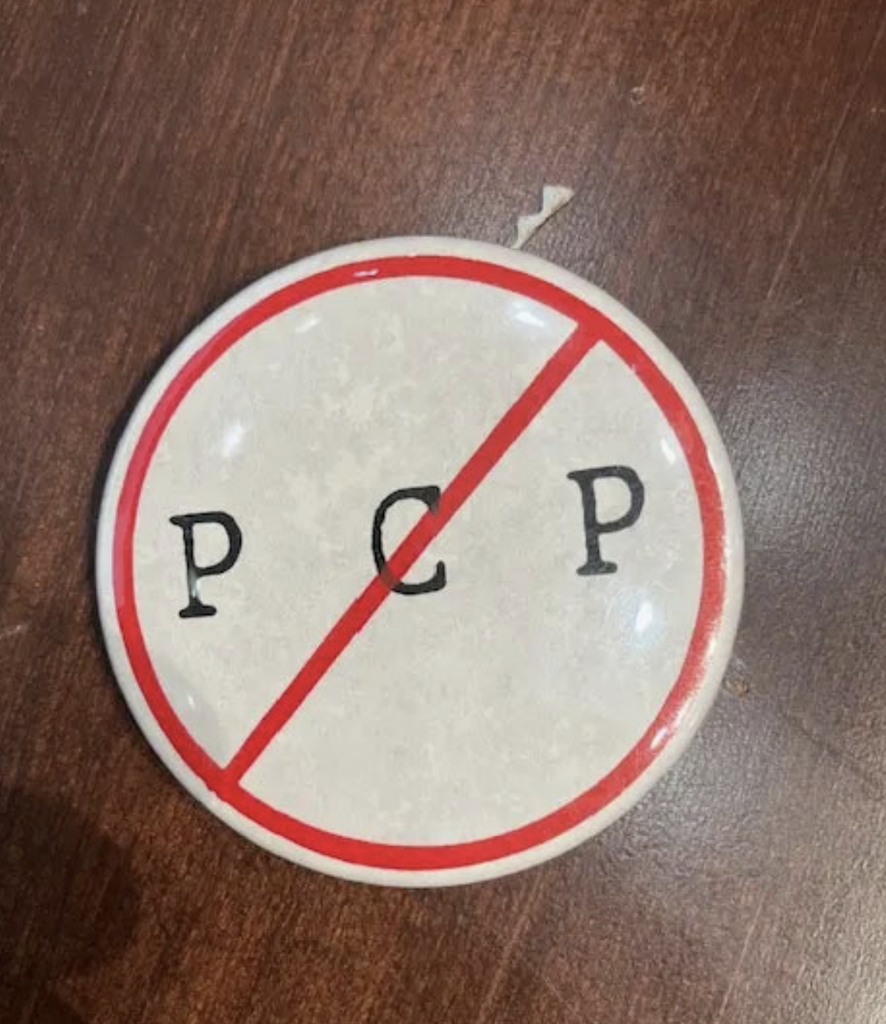
“In the Legislature we were so well positioned that we could do pretty much whatever we decided to do,” Ebersole recalled. This was a time when money for the UWT, Foss cleanup, the Broadway Theater District r restorations and the land to build Chinese Reconciliation Park was appropriated as well. So much money was flowing to Tacoma that then-State Rep. Maria Cantwell printed up buttons to protest.
While Gov. Booth Gardner was a somewhat reluctant Don, the rest of what became known as the Pierce County mafia was less so. Ebersole was speaker, Dan Grimm was the Ways and Means chair, Art Wang chaired the capital budget committee and in the Senate, Sen. Lorraine Wojahn exercised the power displayed in her nickname “The Norse Goddess of Terror” to keep House-passed spending in the Senate budgets.
“I first heard from Grimm about a downtown museum,” Ebersole said. “He had been asked for money to restore the old museum but thought it better to spend money on a new museum than the old one.”
Former U.S. Rep. Norm Dicks gets most of the credit for getting the money to save Union Station via creation of a new federal courthouse connected to the station.
Navigating the politics and personalities of Congress, the federal judiciary and the General Services Administration required someone with his skills and bulldoggedness.
U.S. District Court Judge Robert Bryan had to convince his fellow judges to give up their majestic chambers in the old Post Office on A Street for new digs in a sketchy part of town.
Dicks was less enamored of the history museum, which he feared would take away from the stature of the grand dome. That’s the reason the new courthouse, to the north, has such a low profile and he demanded a similar fealty for the museum to the south.
Ebersole said the congressman pulled him aside during a downtown event and said “If you build this that high it will be a pox on both our houses.
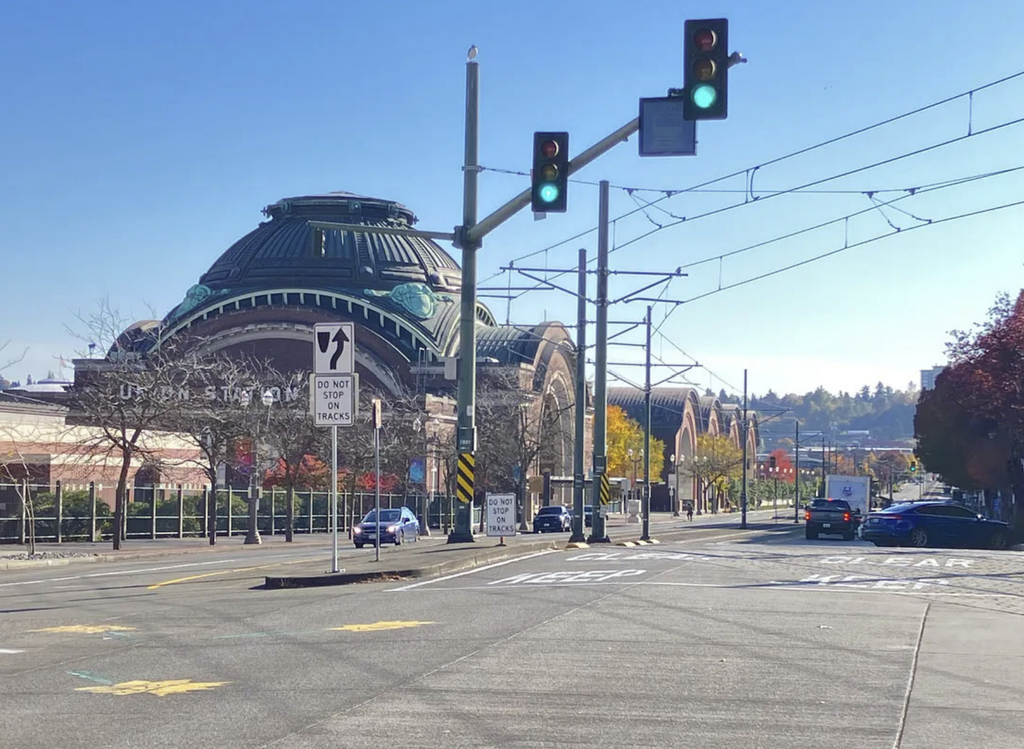
“He wanted it the same height as his courthouse,” Ebersole recalled. Dicks didn’t prevail — the museum’s arches are the same size as the station’s — mostly because the museum was built with state money, not local. Nicandri noted that the state committed to build the museum on Pacific Avenue before the feds committed to the courthouse project and before the site-selection effort for UWT finalized the current campus location.
Nicandri said the UWT would have been next to Tacoma Community College had it not been for the momentum created by the museum project.
“If the historical society doesn’t commit here, there’s no UWT across the street,” he said.
It also showed the Tacoma Art Museum what was possible and gave confidence to the promoters of the Glass Museum.The museum design competition attracted serious contenders — 48 in all — for what at the time was a sizeable $42 million project. Eight finalists included two from England, one from Japan and five from the U.S. Four made the final cut — Michael Graves; Charles Moore and Arthur Andersson; Arthur Ericksson; and the firm of Hammond, Beeby, Babka. Graves’ design resembled Mayan Temples, Ericksson’s “Stealth Whale” was all glass, the Hammond entry looked like a Bavarian Lodge.
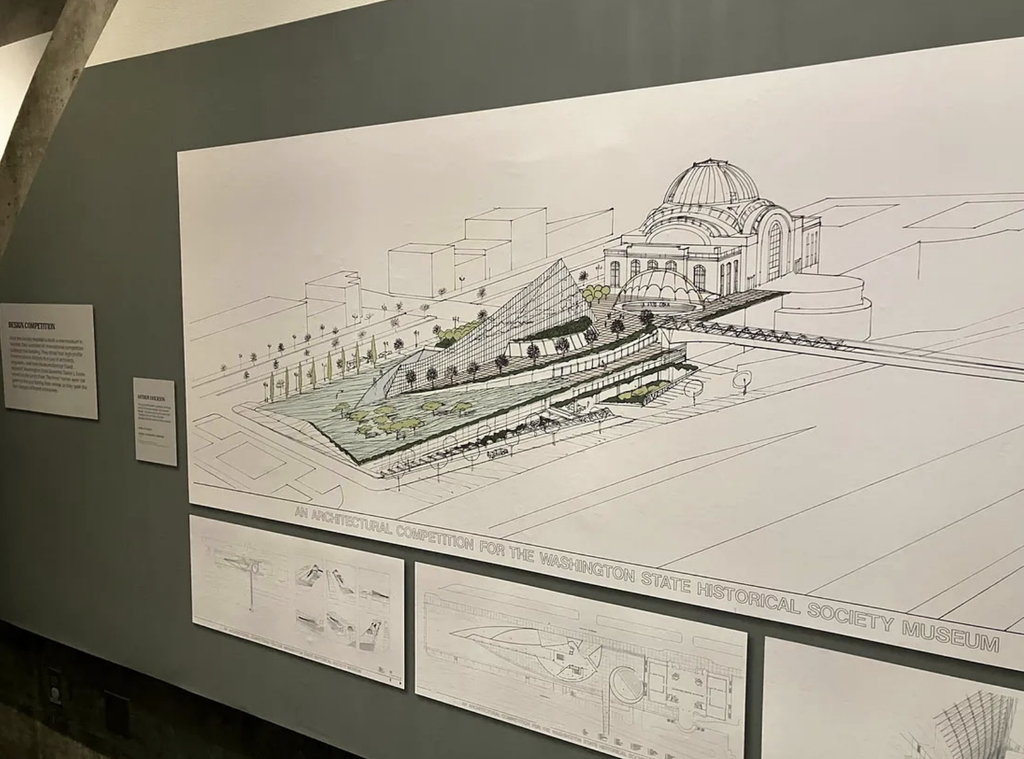
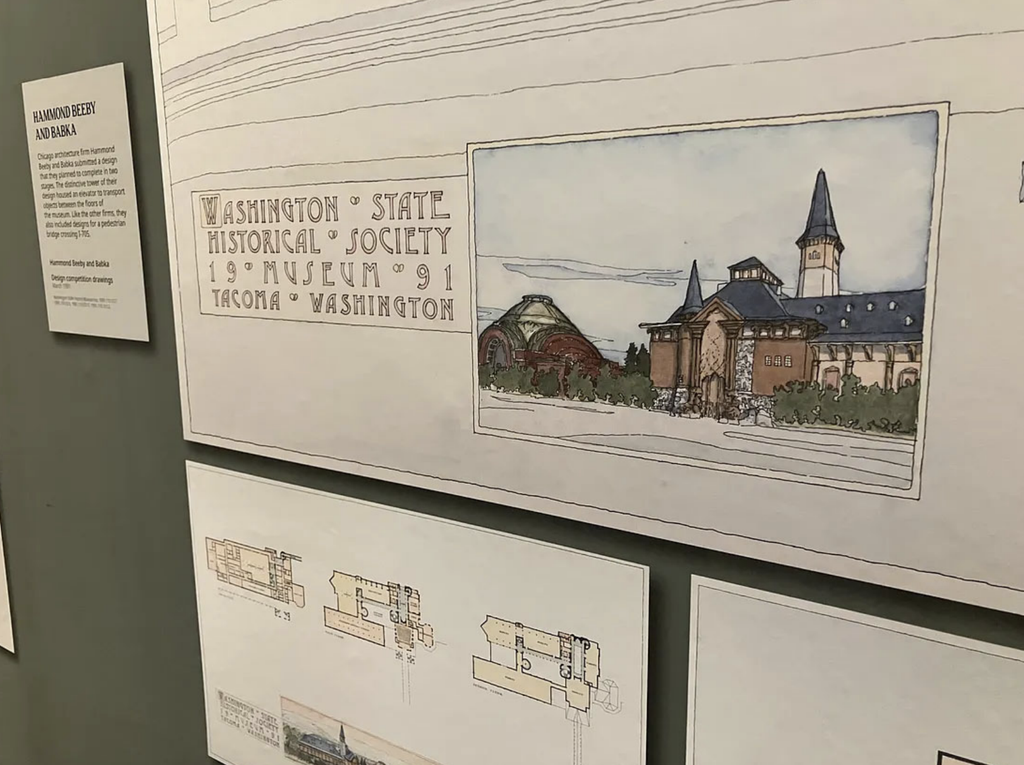
Only Moore and Andersson took inspiration from Union Station itself and won the job.
Andersson spoke of his first look at the project site.
“We loved the proportions of Union Station. We loved how the masonry was used in such a fantastic way to make the arches,” Andersson said during the panel discussion.“I started calling it the train barn next to the train station. Linked to the train station — not physically but emotionally — but subservient to it.”
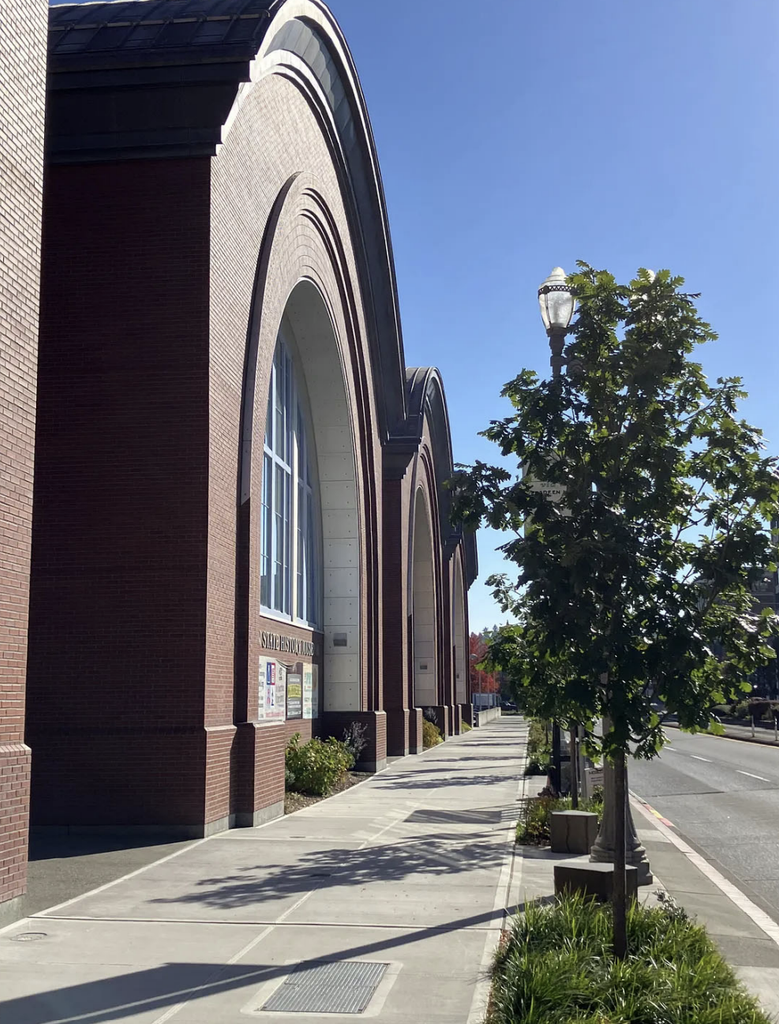
Legislative reluctance to fund the entire request led to one significant cut to the project — a parking garage beneath the museum. Andersson said creative use of concrete on the exterior also saved money.
Finally, he made the comparison that is often made in photos of Tacoma.
“I think the dome has such a beautiful connection to Mt. Rainier,” he said. “That is your Mt. Rainier in the middle of your city.”
Here are three fun facts about the project:
The bowl that forms the outdoor amphitheater at the entrance to the museum is the inverse shape of the station’s dome, as though the dome was turned upside down and pressed into wet mortar.
The UWT master plan includes the primary spine on South 19th Street that looks directly through the entry arch of the museum. The architect of that master plan was Charles Moore, Andersson’s partner who died shortly after ground was broken on museum construction.
It is not a coincidence that I-705 dips down to ground/track level when it runs next to the museum and Union station. That was the result of citizen objections to the elevated nature of the freeway that essentially created a version of Seattle’s Alaskan Way Viaduct between downtown and the Foss Waterway. The compromise was to lower it between the cable bridge and the ascent into downtown, Stadium Way and Schuster Parkway.