
BY AARDE WRITES for WEEKLY VOLCANO | 11/20/26
Hey Aarde, Everything seems pretty heavy lately: human rights, human wrongs, disaster, and sadness. I try to stay positive, but sometimes I feel very tired and helpless. What are some things I can do to make it through the darker holiday season without getting too deep in my feelings?
Signed,
Wintering Warnings.
Hey Wintering Warnings,
Your call name has me wondering if you’ve read “Wintering” by Katherine May. If not, I suggest you get a copy stat.
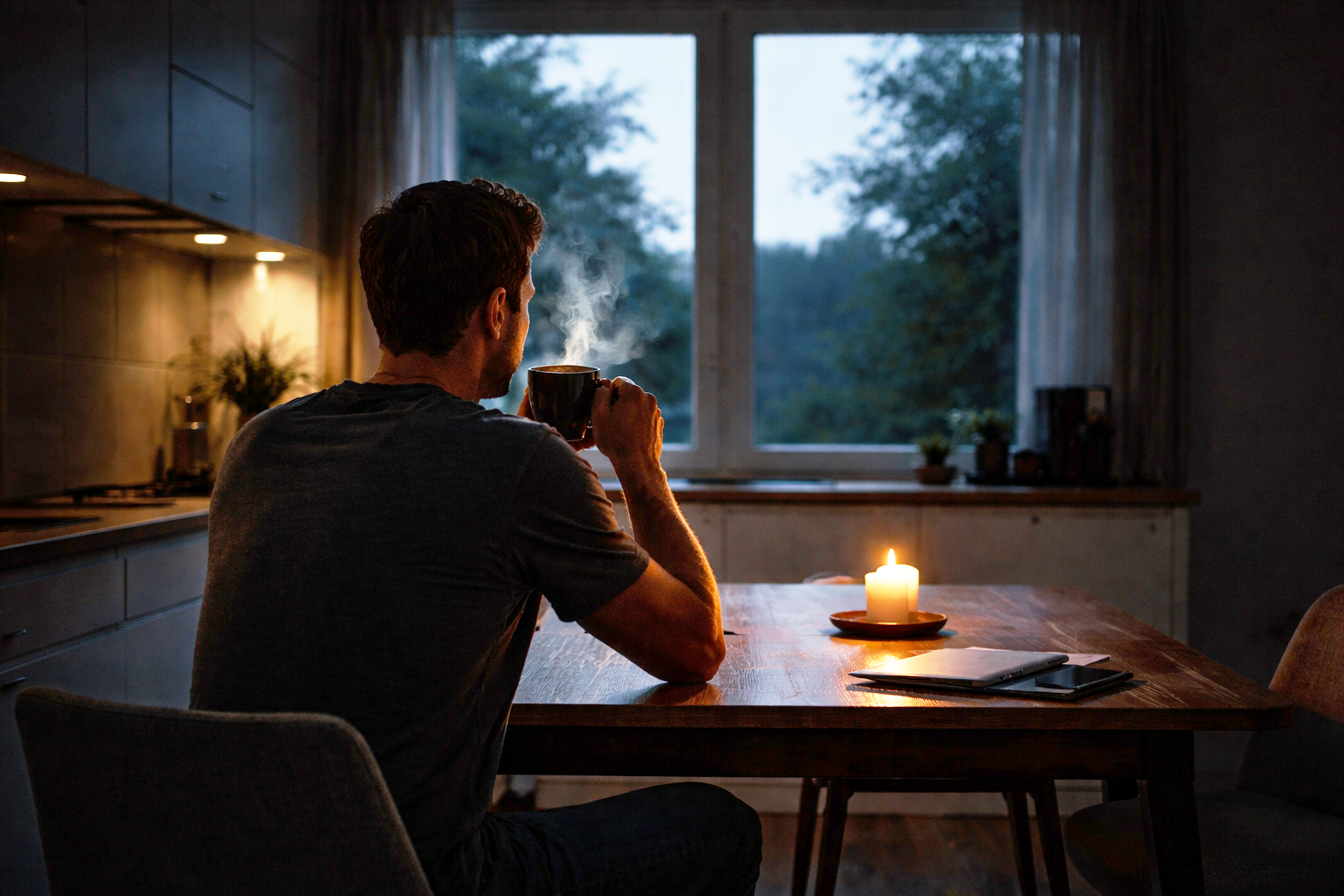
May explores “wintering” as more than a season on the calendar. It’s nature’s cycle when things slow down, and we’re forced to reckon with circumstances we can’t change. Rather than resisting these periods of darkness, perhaps we can learn from Mother Earth, who doesn’t apologize for needing a little downtime.
There’s a difference between experiencing sadness and sinking into the swamps of sadness. And judging by your letter, you might be worried about the latter. I don’t blame you. There’s an awful lot to be sad about, but that’s been true since forever: wars, political division, human suffering, environmental disasters, buildings crashing in on their inhabitants due to greedy builders next door, inflation, all with the expectation of a particularly merry dinner party with cranberry cocktails.
Here’s the thing, you’ve always had a shadow when the light hits your form; there it is, following you wherever you go. Our emotional shadows aren’t much different. Grief, sadness, fear, and disappointment aren’t necessarily things to fix or discard. They’re part of us, deserving of acknowledgment, experience, and even a little reverence. After all, you can’t play the blues unless you’ve had the blues, and the blues is beautiful.
But winter blurs the boundaries. With less light, it becomes difficult to distinguish which shadows belong to us, which ones we’ve picked up along the way due to bad lighting, and which are simply consequences of being alive in a beautiful and brutal world. Perhaps the work isn’t to eliminate our shadows, but to carry them with tenderness and acceptance. So how do we acknowledge the darkness without becoming part of it?
That brings me to something I find fascinating: energy.
Before you roll your eyes at the woo-woo of it all, hear the science of it.
On a quantum level, everything around us is made of atoms and particles interacting through energy. Our bodies, the trees, my blue metal desk, your obnoxious relative who doesn’t understand the dignity of human rights unless they’ve lost theirs. All of it.
Quantum physics doesn’t suggest positive thoughts magically change the universe, but it reminds us how dynamic and interconnected the physical world is. We can’t think a war into ending, but we can influence our immediate surroundings through our attitudes, choices, and actions.
Ever walked into a room after two people argued? You could probably sense the tension without anyone explaining it. Likewise, someone’s laughter or kindness can change the entire mood. Whether that’s quantum entanglement is another conversation, but the philosophical parallel is intriguing. Human connection reminds us we’re less separate than we imagine, and our influence can extend beyond our immediate awareness. (*See one of my top five favorite films , “I Heart Huckabees”).
Here are a few suggestions for taking responsibility for the atmosphere you create in your corner of the universe, hoping it trickles softly and kindly across your dimension.
Journaling is my first tool for processing emotions, getting them out of your body and onto paper. Work the kinks in your mind and heart through your hands. You can always pick those feelings back up later, but give yourself a break from carrying them all day.
Another contemplative exercise involves filling your pockets with stones before a walk. Drop one each time you identify a worry, sadness, or burden. By the end, your empty pockets symbolize acknowledgment and release. You haven’t ignored your troubles; you’ve identified them and can decide when, or whether, to pick them up again.
Sometimes talk therapy becomes a circular attempt to rationalize irrational behavior. You can intellectually understand something and still find yourself clenching your jaw or feeling your heart race. Our bodies participate in our emotional experiences, which is why somatic practices incorporating movement and body awareness can complement traditional therapy. As psychiatrist Bessel van der Kolk’s “The Body Keeps the Score” suggests, difficult experiences can affect us physically. You cannot always think your way out of something your entire body is experiencing.
Which brings me to ChiWalking, a mindful movement practice inspired by tai chi. Chi refers to the vital energy within us, and ChiWalking encourages its flow through meditation in motion. No special equipment required. Step outside, feel your feet meet the ground, and breathe. I encourage you to explore the practice further.
Meditation without walking is worth practicing, too; not to silence your thoughts or escape your shadows, but to sit with both without letting either run the show. The nondenominational Center for Spiritual Living at 206 N. J St. in Tacoma offers open meditation Thursdays from 7 to 8:30 p.m.
And finally, my favorite activity: dance. Ecstatic free-form dancing involves moving without prescribed steps, choreography, or expectations of looking attractive. It’s a primal, playful movement: swaying, stomping, reaching, lowering, or flailing through space. Like meditation, it gets easier with practice. You might discover that moving without judgment makes living without it easier. Look up the Ecstatic Dance 253 calendar, which has held two monthly events at The Poet at Manuscript, 202 St. Helens Ave., Tacoma. Bring your water bottle!
And while we’re discussing energy, consider where you’re spending yours. Attention is finite, and being perpetually distressed isn’t a civic obligation. You can care deeply without consuming every injustice. Sadness deserves acknowledgment, but suffering isn’t proof of caring.
This winter, be intentional about what influences you. Rest, read, get outside during daylight, and surround yourself with people who replenish rather than deplete you. If sadness becomes persistent or overwhelming, seek support. Sometimes we need more than a positive attitude and a walk around the block.
You can hold sorrow in one hand and gratitude in the other without betraying either.
And borrowing one last thought from the quantum world, what appears fixed may hold possibilities we haven’t yet imagined. Our actions ripple outward; one kindness can influence another, and another.
Winter isn’t evidence that life has stopped. Beneath the surface, nature is resting, restoring, and preparing for what’s next. So put down a few rocks, take a walk, turn up the music, and dance through the darker days. Spring will come. In the meantime, there’s still plenty of softer, quieter living to do.
Do you have a question for Aarde? Email jdaarde@gmail.com.