BY MAUREEN PARKER for WEEKLY VOLCANO | 10/2/2026
OK, so boom . . . with a pair of drumsticks, a pillow, and a candlestick holder that probably never asked to be part of a band.
If you’ve heard Dave Cross play at Unity of South Sound, you might assume he was one of those kids who picked up the drums early and never put them down. That’s not quite how it happened. Cross grew up in a small town in upstate New York and took a few lessons in sixth grade because a teacher expected him to. He and the other boys quit as soon as they were allowed.
Years later, he was lying in bed listening to the Beatles when something about Ringo Starr’s playing caught his attention. Now, if you’ve ever watched Ringo play, you can understand why Cross wanted to figure out what was going on. Each limb seemed to be doing something different. Cross wanted to know whether he could do that, too.
He dug his old sticks out of a dresser and began trying patterns on his pillow and mattress. A candlestick holder in his bedroom stood in for a cymbal. Incidentally, it did not survive. His parents did not particularly appreciate the arrangement, either. His father eventually brought home a pawnshop snare drum and brushes, and Cross began playing along with records.
“I’m sure it was horrible,” he told me, “but it was fun.”
He took a drum kit to college in New Hampshire, where he spotted a notice from a band looking for a drummer. The group already had gigs booked, but its previous drummer had failed to return to school. Cross had the two things they needed: a drum kit and a desire to play.
“They had to take me,” he laughed.
His first fraternity house gig was a scene right out of Animal House. He remembers people swinging from chandeliers and the feeling that he was watching a circus from behind the drums. At the end of the night, someone handed him $35 in cash. To Cross, that settled it: he wanted to keep playing.
And play he did. There were soul bands, cover bands, and an original group called the Dream Engine. After college, Cross briefly taught junior high art in Albany, New York, while the Vietnam War was underway. He considered architecture school and found that he might have a knack for teaching. Then his former Dream Engine bandmates called. They wanted to give music a serious try, and they wanted him behind the kit.
Cross gave himself a day to decide. He was 23, he reasoned, and if the band fell apart, he would have time to figure out what came next. He said yes.
The musicians left the Dream Engine name behind and played under several others along the way, including Ragweed, Galadriel, and Fred. Cross still thinks Dream Engine was the best of the bunch.
“Marketing wasn’t our strong suit, to say the least!” he wrote.
The group built a following around Vermont and the Northeast. Then a bandmate persuaded them to move across the country to Portland, Oregon. Only later did Cross learn that the move had a lot to do with that bandmate’s girlfriend, who lived there. The band eventually broke up, but Cross stayed. He liked Portland and wanted to give it a chance.
While there, he decided that a working drummer ought to learn more formally. He took two lessons from Portland drummer Mel Brown. Two lessons were all Cross could afford, but they stayed with him for decades.
Cross moved to Tacoma in August 1976. Over the years, he played with local groups, taught drum students and discovered how much he enjoyed helping young musicians find their way. Teaching began when a friend’s son insisted that Cross be the one to give him lessons. Cross wasn’t sure he knew how to teach drums, but he agreed. Word spread, and before long he had several students a week.
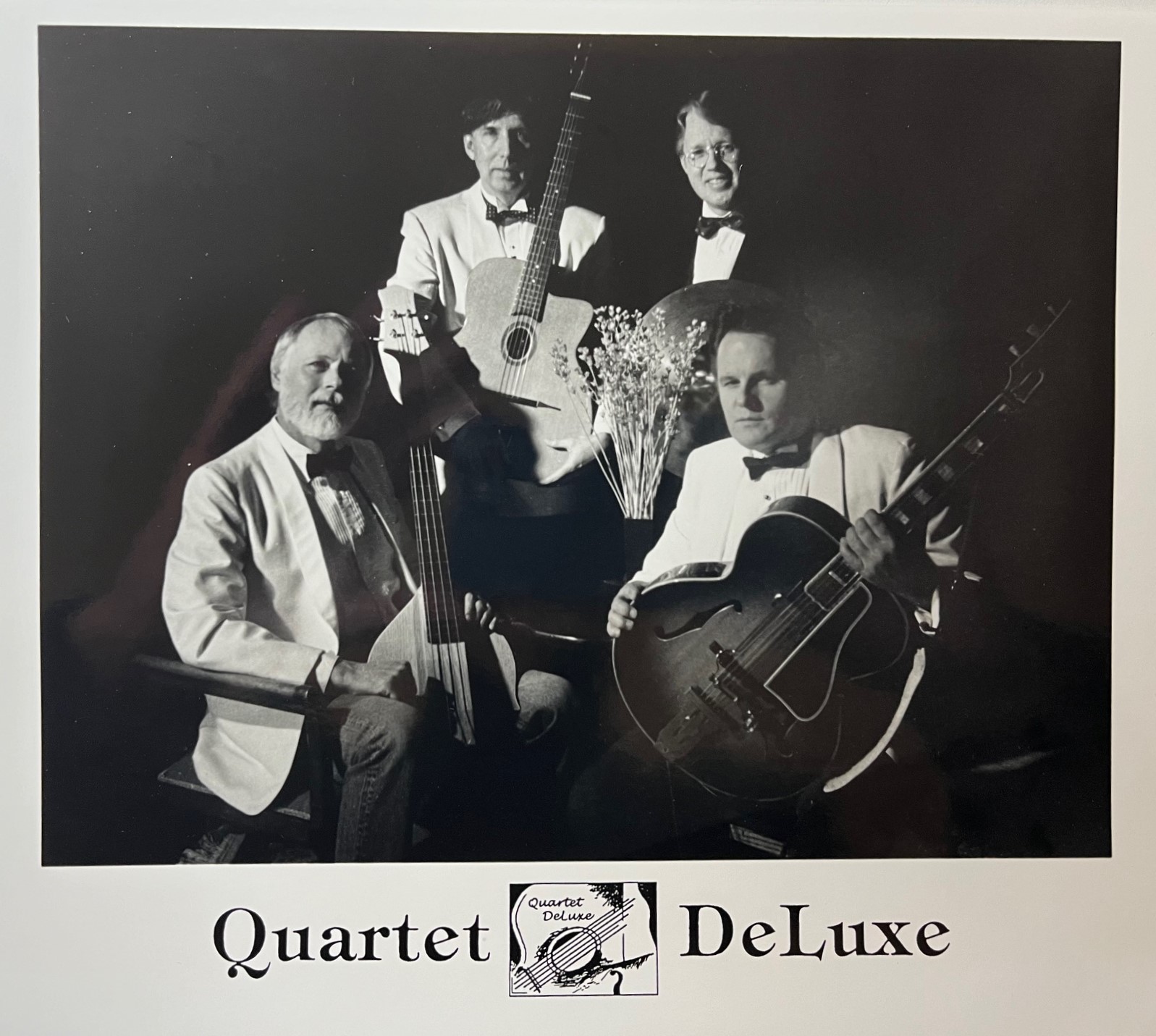
His playing took him through R&B and rock and roll, and into a very different kind of music with guitarists Dudley Hill and Neil Andersson. Their band, Quartet Deluxe, recorded a CD of the same name, featuring jazz influenced by Django Reinhardt. Cross found himself using brushes on much of the music and gradually trimming down his drum setup because the songs simply didn’t need more. The group eventually evolved into Pearl Django, without a drummer.
That willingness to listen and adapt is part of what has kept him playing. It also helps explain his place at Unity of South Sound.
Cross met music director Serni Solidarios through the University of Puget Sound after moving to Tacoma. Now y’all know Serni’s been brought up before, and he definitely will be again. They connected through music and occasionally played events together. Nearly 20 years ago, Solidarios called to ask whether Cross would join the band at Unity. Cross didn’t know much about the church, but the invitation sounded like fun. He went, liked the people and stayed.
If you’ve attended a service there, you know the music can be wonderfully unpredictable. Guest artists join in, plans change, and sometimes the players are still discovering what a song will become as they start it. Cross enjoys that.
A lymphoma diagnosis and the pandemic changed where he could safely play. He stepped away from bar gigs and in-person teaching because treatment affects his immune system. He also took time away from Unity, then returned to the band he had missed. He told me that its spacious room feels comfortable for him, and he is still playing there.
What stays with me from our conversation is that Cross never described a straight road to becoming a musician. He followed a sound on the radio, took a chance on a college band, crossed the country with another, and kept learning from the people he played beside. Decades later, he’s still listening for what the music needs and still finding joy in being there to play it.