BY MAUREEN PARKER for WEEKLY VOLCANO | 8/21/2026
OK, so boom.
I’ve been here in the Tacoma area for over 40 years (California transplant, sue me), and in that time I’ve been to almost every type of music venue you can think of, from intimate little rooms to stadium concerts. That being said, one of my favorite genres to listen to, experience, and just embrace is jazz.
I once heard somebody say jazz was just an excuse for musicians to play any note they wanted to and call it music. And to that guy I say: next time you want to come outside, don’t.
That being said, the jazz scene I’ve observed in this region has been top tier, in my opinion, and one of the artists I’ve enjoyed seeing, listening to, and learning from is Tracy Knoop.
My guy is a walking history lesson.
A Pacific Northwest native, Tracy has been here most of his life and has raised his children in this area. He started playing music in school in 1973 and eventually studied at Berklee School of Music in Boston. From there came a career that has put him on stages with some seriously impressive names while still keeping him deeply connected to the Tacoma-area music community.
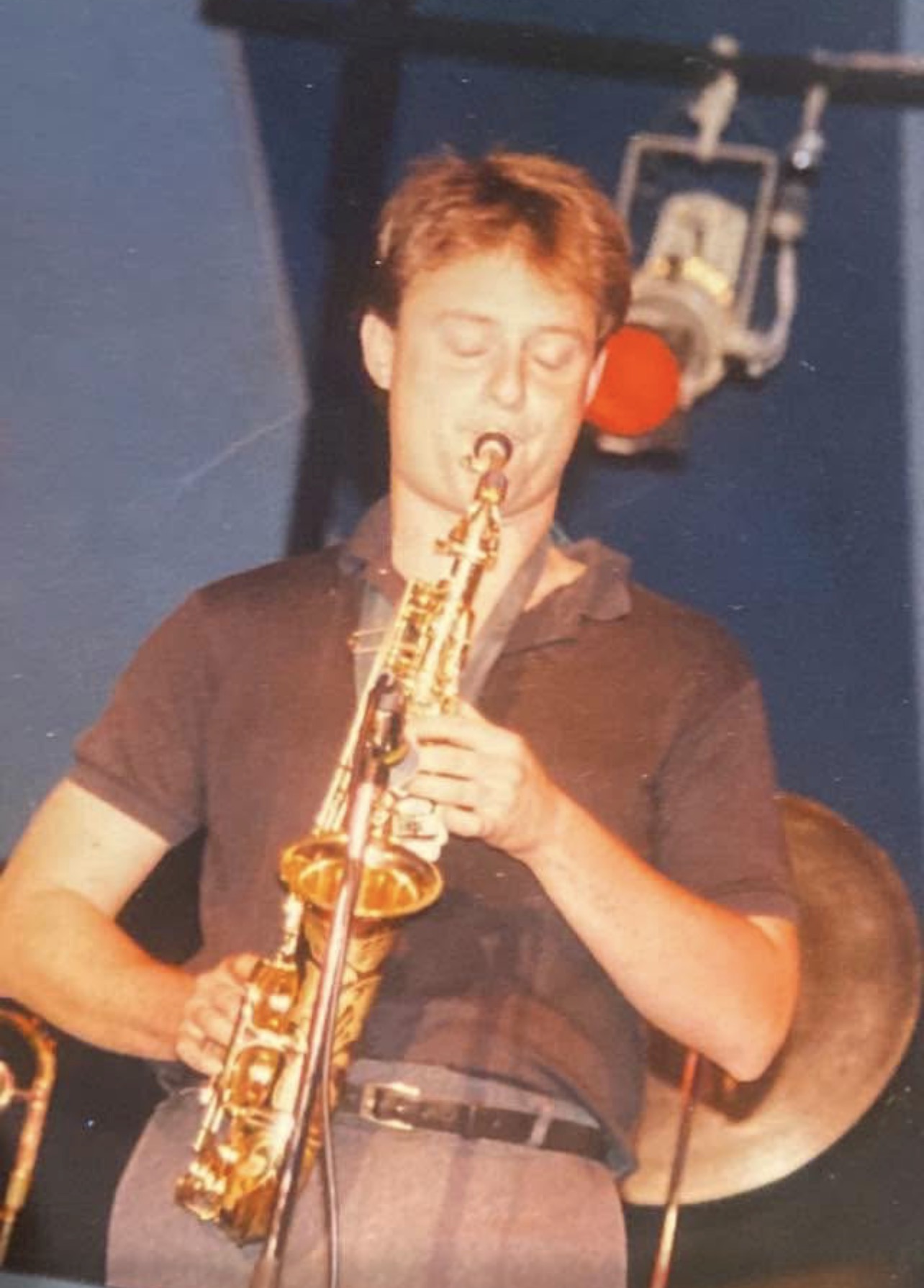
Tracy spent what he recalls as 12 years with the world-famous Tommy Dorsey Orchestra, playing lead alto saxophone and touring extensively. And here’s where one of those little pieces of history gets really cool.
In January 1987, the Tommy Dorsey Orchestra took part in Sentimental Swing: The Music of Tommy Dorsey, taped at the Hollywood Palladium for a national PBS broadcast. The lineup included Mel Tormé, Jack Jones, Maureen McGovern, and the legendary Buddy Rich.
And Tracy was there.
So if you happen to find the footage, look for the sax player with lots of hair.
Yep. That’s my guy. Lol.
And that’s only part of the résumé. Over the years, Tracy has performed with touring artists as well as local musicians he’s known, worked alongside, and, in some cases, actually taught.
That teaching is also how our paths crossed.
Tracy served as director of the Jazz Orchestra at the University of Puget Sound for 11 years, working alongside Serni Solidarios until Tracy retired from the university in 2025. Teaching, however, is another story because apparently Tracy doesn’t know the meaning of retirement.
He still teaches privately and through Ted Brown Music, and this man stays busy seven days a week.
Sir.
We talked about this.
Take. A. DAY.
Balance, my friend. Balance.
Especially because teaching isn’t the only thing keeping him busy. Tracy plays multiple instruments, including saxophone, flute, clarinet, and oboe, and he still practices three hours every single day.
Every. Day.
He practices like a gym rat who has to get that workout in. No days off. And after talking with him, you understand that the discipline behind his musicianship is every bit as important as the talent. Having teachers who were classically trained helped make him a beast when it comes to reading music, which matters when you’re working with traveling artists and stepping into situations where you need to know your stuff.
But jazz is where his heart is.
Tracy also studied alongside Delfeayo Marsalis, and the two remain friends. And if you don’t recognize that last name, do you even know jazz? Delfeayo has returned to this area several times and has performed with the Jazz Orchestra at UPS, another example of just how interconnected this music community really is.
Like usual, I asked Tracy the question I’ve been asking musicians lately: what does he think about AI creating music?
His answer was about as Tracy as it gets.
He knows nothing about it. He doesn’t use it. He likes YouTube and live video recordings. He doesn’t see a reason to use AI because it doesn’t give him anything, doesn’t make what he does easier, and he simply doesn’t need it.
And you know what I’m gathering from most of these musicians?
They don’t need it, want it, or use it.
So there!
They’re not necessarily mad at anybody who does use it, but for the most part, the musicians I’ve talked to don’t really mess with it, and I tend to agree.
During our conversation, Tracy and I also reminisced about the earlier days of jazz in Tacoma, and that’s another reason I think his story is important. His career isn’t just about the famous people he’s played with. He’s part of the connective tissue of a Tacoma jazz scene that has been here for generations.
While doing research for this piece, I came across the Seattle Jazz Academy website. Right there on its front page was Tracy, along with another staple of our area, Kareem Kandi, who, coincidentally, was one of numerous musicians Tracy taught who have helped make up this region’s jazz community.
Think about that.
A musician learns here, leaves and plays around the world, comes home, teaches another generation, and some of those students become staples of the same music community themselves.
That’s how a music scene becomes a legacy.
Tacoma has a rich musical history, and jazz is absolutely part of it. People need to stop sleeping on our area, if I haven’t mentioned that before.
Hint. Hint.
Get outside. Appreciate our city. Appreciate our music scene. Appreciate these venues and, most importantly, appreciate our artists.
And not just in the summertime.
FFS. Lol.