BY MAUREEN PARKER for WEEKLY VOLCANO | 8/7/2026
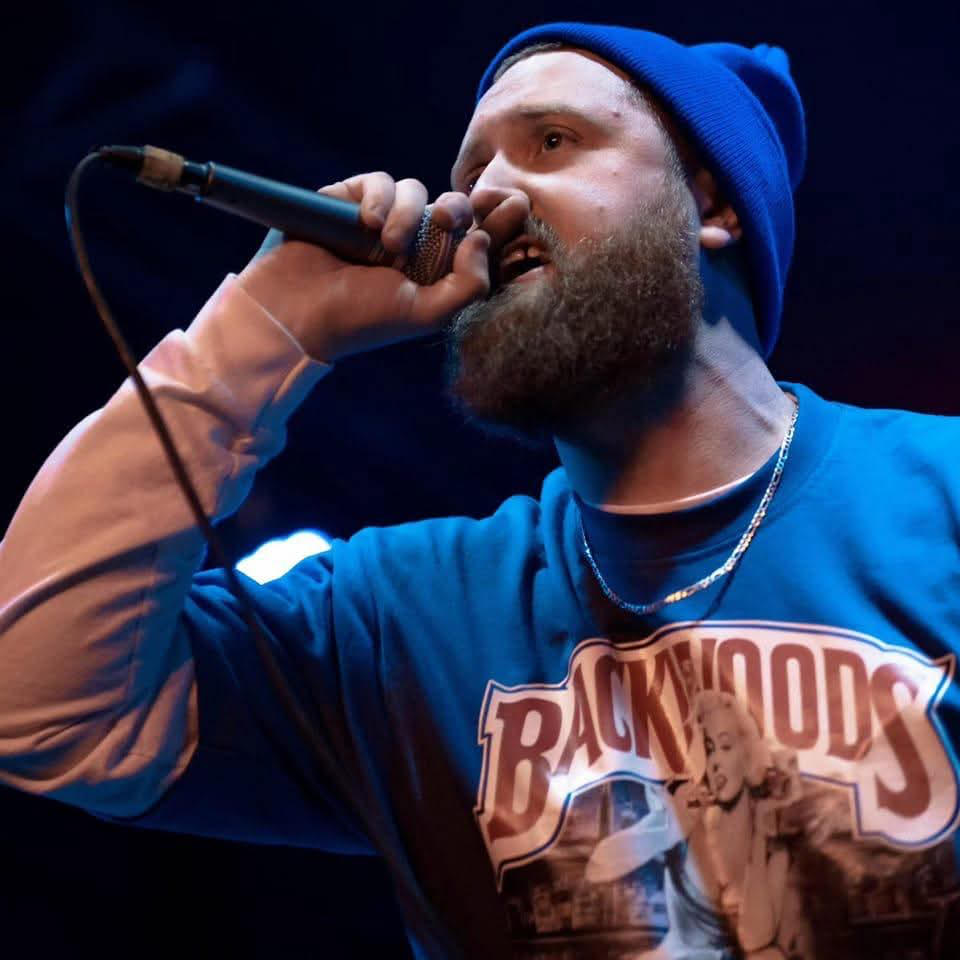
OK, so boom! Joshua Iversen, better known as Whitebear, grew up in the White Center/West Seattle area and has been immersed in hip-hop for as long as he can remember. What started as a hobby—making music with his brother and close family friends—eventually became a passion that never let go. Once rap found him, there was no turning back.
Back then, he performed under the name Swift as part of a group called Deadly Poets, alongside his brother and two friends. Their style leaned toward the rapid-fire delivery of Tech N9ne, while also pulling heavy inspiration from the Bay Area sound. In fact, if you spend any amount of time talking music with Whitebear, one name comes up almost immediately: Mac Dre. Whitebear’s admiration runs so deep that he can rap Mac Dre’s lyrics word for word, and you can hear that influence woven into his own music even today.
That signature fast-paced flow has taken him to festivals and venues throughout the Pacific Northwest, in Las Vegas, and beyond, including performances alongside artists such as Three 6 Mafia, Bone Thugs-N-Harmony, and Andre Nickatina, who helped him write his story as a performer.
His stage name has a story behind it too. The name Whitebear was given to him by the grandmother of one of his Native friends, and it stuck. Funny, how sometimes the names we’re given end up fitting us better than the ones we choose for ourselves.
Like many artists, his career can almost be divided into two chapters: before COVID and after COVID. The pandemic changed the landscape for everyone. Groups split up, opportunities disappeared, and musicians were forced to ask themselves what came next. Some careers stalled. Others found new life. Whitebear chose to keep moving forward.
Post-COVID, he stayed connected with Tom Hutch, whose work has reached far beyond promoting live shows. Hutch has been involved with several projects, including a documentary about San Francisco-based artist Rappin’ 4-Tay that’s narrated by legendary hip-hop personality Sway Calloway, as well as the upcoming documentary Sessions, which explores the history and influence of the Tacoma and Seattle hip-hop scenes.
That topic naturally led us into one of my favorite parts of our conversation.
There is an incredible amount of talent in the Pacific Northwest that simply doesn’t receive the recognition it deserves. Tacoma. Seattle. White Center. There are artists creating phenomenal music every single day, yet somehow many of them remain hidden from the rest of the country. For Whitebear, helping preserve and celebrate that history isn’t just another project; it’s personal.
One thing I appreciated about our conversation was his perspective on community. We talked about the idea that some people believe there’s only room for a handful of artists to succeed. That the scene is “oversaturated.” That Tacoma and Seattle somehow have to compete instead of collaborate.
I’m not buying it…and neither is Whitebear. Sure, gatekeepers exist. They always have. But so do artists who genuinely want to see everyone win. Supporting another musician, he explained, doesn’t take anything away from your own success. If anything, it strengthens the entire scene. The loss of local radio and the rise of streaming have made the Pacific Northwest music community feel a little disconnected, but maybe it’s the artists themselves who will bring everyone back together.
There’s simply too much talent around here to not support one another. Stop it.
And before you assume Whitebear only makes music about one thing because cannabis culture occasionally shows up in his lyrics…don’t. His catalog is far more versatile, and he’s constantly pushing himself creatively, refusing to stay in a single lane. Growth has become just as important as the music itself.
That entrepreneurial mindset extends beyond music. Whitebear has also stepped into the technology space by developing Hitz Media, a platform designed to spotlight artists and creative projects. Rather than waiting for opportunities to come his way, he’s working to create them—not only for himself but for other creatives as well. It fits perfectly with the philosophy he shared throughout our conversation: Build community, open doors, and leave the scene better than you found it.
For Whitebear, creativity isn’t limited to writing lyrics or performing on stage. Whether it’s music, technology, or finding new ways to connect artists with audiences, he’s always looking for the next challenge.
As our conversation started winding down, Whitebear shared something I wasn’t expecting. After identifying as an atheist for nearly 15 years, the past year tested him in ways he never imagined. He battled serious kidney-related health issues and found himself losing almost everything he’d worked so hard to build. During that season, he found himself leaning into faith in God.
Whether that journey eventually becomes a larger part of his music remains to be seen, but hearing him talk about it reminded me that life has a way of humbling all of us.
Here’s the part that stuck with me. Whitebear is only 31 years old. He’s a husband and a father of three. This weekend, he’ll be moving his family from an apartment into a house, a milestone that represents far more than a change of address. It’s the result of perseverance, sacrifice, and continuing to believe that tomorrow can be better than yesterday.
And I don’t think he gets there alone. Having a supportive spouse while chasing a dream is something that can never be overstated. Behind so many artists is someone who quietly believes in them on the days they struggle to believe in themselves.
When I walked away from our conversation, I wasn’t thinking about streaming numbers or festival lineups. I was thinking about a young man who’s still writing music, still encouraging other artists, still raising his family, still rebuilding his life, and still moving forward.
Sometimes, success isn’t measured by where you’ve arrived. Sometimes, it’s measured by the direction you’re headed. And I’d say Whitebear is headed in the right direction.