BY MATT KITE for WEEKLY VOLCANO | 9/11/2026
Intimidating. Too often that’s how the game of golf appears to those on the outside looking in.
A set of golf clubs might cost anywhere from $200 to $1,500. Add to that the price of golf balls, golf shoes, golf wear, green fees, driving range costs, lessons, and club membership, and you’ve successfully priced out countless would-be golfers from ever taking up the game.
Then there’s golf’s European heritage, which, for centuries, was steeped in aristocratic privilege and strict segregation. For much of its storied history, golf was strictly for white gentlemen of means.
Enter trailblazers like Jenefeness Franke and the Soft Life Swing Society.
Franke, a college professor who lives in rural Pierce County, took up golf in 2019.
“At the time,” she recalls, “I didn’t think golf was for me. I was athletic, but golf felt intimidating, expensive, and like one of those spaces you needed to already know how to navigate. My daughter was enrolled in First Tee, and sitting there watching her is what first made me curious.”
First Tee, a popular golf program for at-risk and underprivileged youth, inspired Franke to think not only about her daughter’s budding golf skills but her own potential. Not long afterward, she found herself shopping for her first set of golf clubs, which she bought for an affordable price at a thrift store.
One barrier down. One to go.
As a woman of color, Franke was keenly aware of the occasional sideways glance or subtle act of disrespect she would encounter on the golf course. She began gathering others who felt similarly intimidated by golf’s staid rituals, and soon a new golf community was born: the Soft Life Swing Society.
Working in tandem with Fir State Golf Club, a venerable Puget Sound organization known for making inroads for minorities in the game of golf, Franke began offering free five-week clinics. The primary goal? Removing as many barriers as possible.
“Women didn’t need clubs, golf clothes, or money for lessons,” she explains. “We had five cohorts of approximately twenty-five women each, and there was consistently a waiting list. That demand told us something very early: Women were interested in golf. They just needed an invitation and an accessible way in.”
By 2023, Franke was running paid clinics at Meadow Park Golf Course in Tacoma, and these days, the women from Soft Life Swing Society are regulars at Meadow Park and Kent’s Riverbend Golf Complex. In total, nearly 200 women make up the community. Nearly all of them joined as beginners. Not everyone shows up every week, but the group is steadily growing and claiming a space for itself among Northwest golfers.
“We’re not trying to inflate participation numbers,” Franke clarifies. “What excites me is watching women keep coming back. Some arrive having never touched a golf club. We bring extra clubs, give them a quick introduction, and get them playing. They borrow our clubs for a few weeks. Then suddenly they’re buying their own clubs. They’re buying golf clothes and equipment. Some are even buying their own push carts. They’re becoming golfers.”
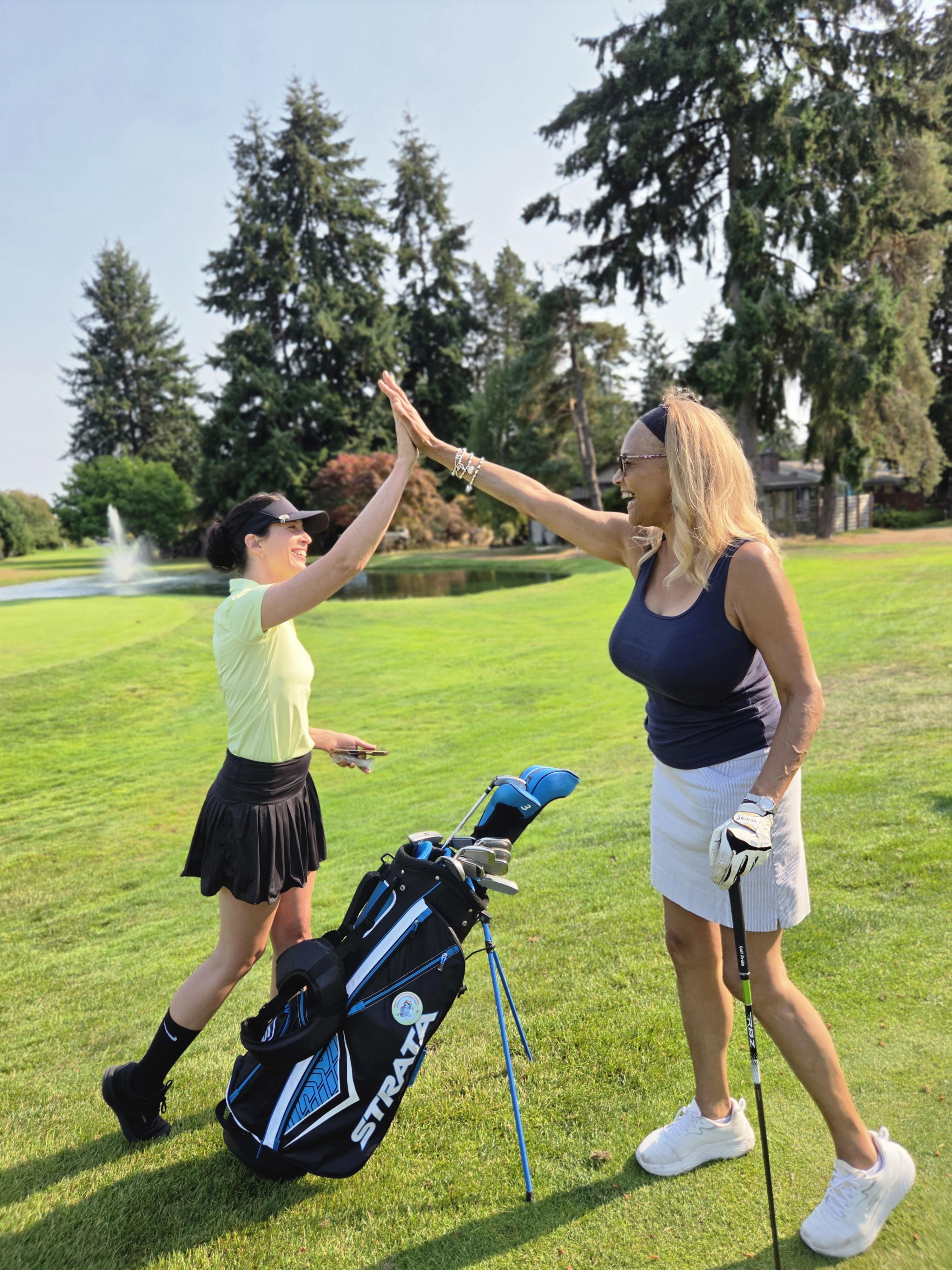
Casual. Supportive. Fun. Soft Life Swing Society is all of that.
“We’re laughing,” Franke says. “We’re celebrating. We’re doing birdie dances. We’re having a good time. But having fun doesn’t mean we aren’t golfers.”
This, it turns out, is news to a smattering of fellow golfers who seem annoyed by women of color having fun while golfing.
“There have absolutely been times when we have felt unwelcome on the golf course,” Franke explains. “I’ve been given golf balls with a comment about how many I lose. We’ve been hit into while still on the green. We’ve had golfers jump ahead of us, curse at us, and tell us, ‘You’re not even playing golf.’”
Such incidents, rather than deter Franke, merely strengthen her resolve.
“One thing I’ve realized is that we also have to become more comfortable speaking up,” she says. “Sometimes our instinct is to absorb the disrespect, keep playing, and move on. But if something happens, we need to tell the pro shop. We need to document it. We need to advocate for ourselves.”
Adds Franke, “Belonging isn’t simply being allowed onto the golf course. Belonging means knowing we have the same right to be there, enjoy ourselves, and be treated with respect as everyone else.”
Although initially aimed at women of color, Soft Life Swing Society is anything but exclusive. Today it’s open to anyone who feels excluded from the game of golf or unable to participate because of financial or social barriers.
Multiple organizations and companies have stepped up to help out, including Pro Golf Discount, which has teamed with Soft Life Swing Society to build a “club closet” for newcomers.
Beginners, Franke advises, need only follow one simple rule: Just show up.
“You don’t have to look like a golfer,” she says. “You don’t have to own clubs. You don’t have to know the etiquette. You don’t have to be good. Just show up. We will help you with the rest.”
Soft Life Swing Society maintains an active presence on Facebook and Instagram, where prospective participants can learn about tee times, clinics, and other events.