BY MATT KITE for WEEKLY VOLCANO | 9/25/2026
In the concrete depths of LeMay – America’s Car Museum, Charlie Wiggins still rules Indiana Avenue, the beating heart of Black culture in Indianapolis during the Roaring Twenties and the Great Depression.
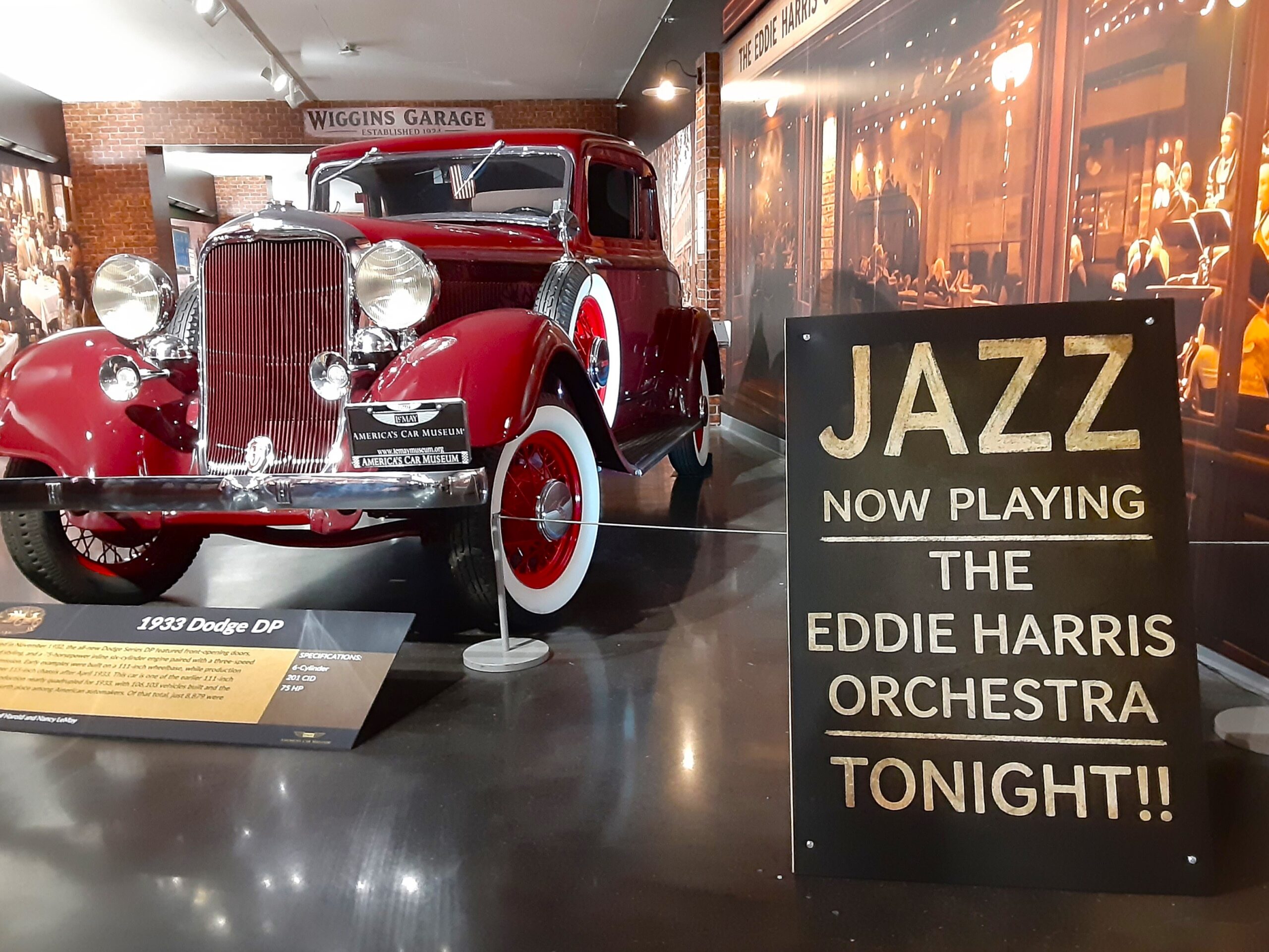
A gleaming red 1933 Dodge DP coupe, its freestanding headlamps framing an enormous chrome grille like bug eyes bordering a gaping mouth, is parked beside a jazz club bathed in sepia tones.
Nearby, white chalk scrawled onto a music store’s slate reader board advertises the latest Fats Waller record on vinyl. Across the street, the red, white, and blue swirl of a barber’s pole alerts passersby to the fifteen-cent haircuts offered inside.
As a meandering saxophone melody drifts down the corridor, a visitor to For Gold & Glory, the museum’s newest exhibit, can be forgiven for feeling lost in a bygone era. Guest curator Ed Welburn was aiming for just such an experience when he first dreamt up the exhibit, which opened earlier this month and pays homage to one of America’s most unsung race car drivers.
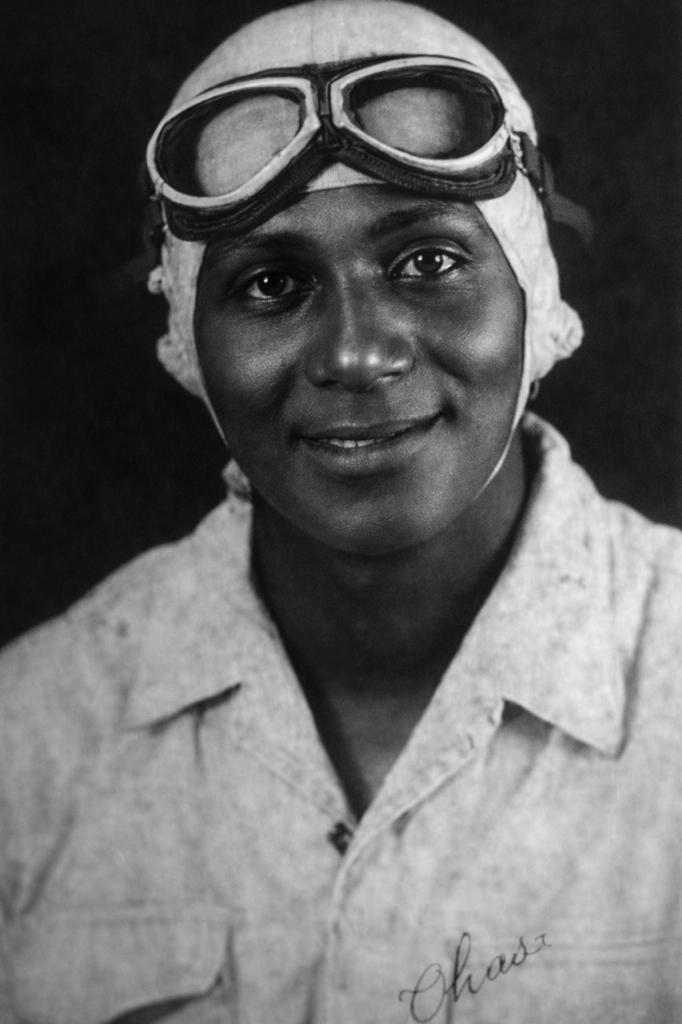
“He was the speed king,” Welburn says of Charlie Wiggins. “He was a little guy, but he was strong-willed. He designed, built, and drove all of his race cars. Built them in his shop in Indianapolis.”
Indeed, near the far end of the museum’s playful reconstruction of Indiana Avenue sits Wiggins Garage, back in its day a working garage where Wiggins applied his considerable mechanical skills. Wiggins repaired cars while shooting the breeze with Charlie’s Gang, a posse of young men hoping to learn from the master.
One of his apprentices, a young John Dillinger, became infamous for a different set of skills. Related Easter eggs posted on the corridor’s walls await the careful-eyed museumgoer.
For Gold & Glory features a brilliant supporting cast, including Roberta Wiggins, Charlie’s wife of sixty-five years, and Wild Bill Cummings, a fellow race car driver who, with Wiggins’s help, won the 1934 Indianapolis 500.
Wiggins secretly worked on Wild Bill’s car, a Boyle Products Special, but watched the race from the segregated section of the stands. Wiggins was Black, Wild Bill was white, and motorsports were strictly segregated. In the days leading up to the race, while whipping Wild Bill’s car into tip-top shape, Wiggins had to camouflage himself as a janitor, lest someone find out he was working on a white man’s race car. And for decades afterward, his role in Wild Bill’s victory remained largely a secret.
As it happened, Wiggins never set foot on the Indianapolis Motor Speedway, back then paved in brick. Instead, he found success on a different circuit: the Colored Speedway Association. Between 1926 and 1936, Wiggins won four championships and never finished worse than fifth.
He surely would have won more, but on September 7, 1936, during what would turn out to be his final race, he was gravely injured in a thirteen-car pileup. The annual Gold and Glory Sweepstakes took his right leg and his right eye.
The Wiggins Special, Charlie’s own creation, went up in flames. Neither the car nor its owner would ever race again.
Wiggins and the Wiggins Special might have been relegated to the dustbin of history. But in 2005, after driving one of the parade cars behind former Secretary of State Colin Powell’s honorary pace car at the Indianapolis 500, Welburn retired to his hotel room, reflexively flipped on the TV, and found himself captivated by a local PBS affiliate’s documentary on Charlie Wiggins.
“I knew nothing about him until I watched the documentary,” Welburn says. “Zero. I didn’t know anything about him or the Colored Speedway Association.”
That all changed as Welburn, the former vice president of global design at General Motors and a member of the museum’s board of directors, threw himself into the subject matter.
What unfolded was a twenty-year-long quest, with Welburn chasing down multiple tips before finally locating the Wiggins Special in a small-town warehouse outside of Dayton, Ohio, a little more than two months ago. The old race car was rusting and in pieces, but with the help of Keith Flickinger and the NB Center in Allentown, Pennsylvania, Welburn ordered it reassembled and shipped to the museum.
“We basically had three weeks,” Welburn says. “I didn’t want a restoration. I just wanted to preserve the car with all its rust.”
Welburn also got an assist from Seattle’s Glenn Mitsui, a third-generation Japanese American and digital artist who runs Mitsui Creative with his wife, Arlene. Welburn did the research on Wiggins, the Colored Speedway Association, and Indiana Avenue, and Mitsui made it come to life on the museum walls. All told, Welburn and Mitsui spent nearly a year planning and creating the new exhibit together.
The dirt tracks. The goggles and leather helmets. The carnival atmosphere of pre-race parades down Indiana Avenue. All come to life at LeMay – America’s Car Museum. Museumgoers can almost hear the roar of the engines and smell the clouds of exhaust fumes.
The marriage between Charlie and Roberta, too, shines in the spotlight. Roberta, a former fashion model in Paris, served as her husband’s business partner and close friend. Along with supporting her community and advocating for social progress, she was one of only a handful of people Charlie trusted to drive the Wiggins Special. The couple had three children, but none lived longer than a year.
Born in 1897, Charlie Wiggins died in 1979. Roberta held on another nineteen years before passing away in 1998 at the age of 102. They had very little when they died and were buried in an unmarked grave. In the early aughts, they were given a headstone during a humble ceremony at Crown Hill Cemetery on Indianapolis’s north side.
Welburn, a pioneering influence in the automotive world in his own right, was inducted into the Automotive Hall of Fame in 2017. He immediately began campaigning for Wiggins’s induction, and sure enough, Wiggins received the same honor in 2021. After languishing in obscurity for nearly a century, Wiggins has reclaimed his rightful place in automotive history.
“I want to expose the world to his story,” Welburn says. “This is part of our American heritage, and I want people to be inspired by it, by the journey of Charlie Wiggins. I want them to understand that inspiration can come from anywhere and everywhere and to just keep pushing hard with whatever it is you want to do.